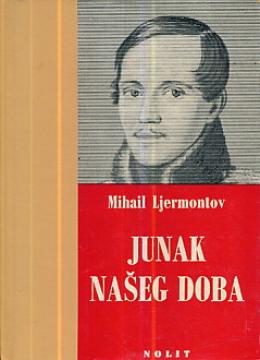
Junak našeg doba

Junak našeg doba

Mihail Jurjevič Ljermontov

A Hero of Our Time is a novel by Russian writer Mikhail Y. Lermontov, published in 1840. It is considered one of the first psychological novels in Russian literature and an important work of Russian Romanticism with elements of realism.

The main character, Pechorin, is a complex and contradictory anti-hero – cynical, intelligent, but also emotionally cold. Through a series of narrative fragments, Lermontov explores his character and motives. The plot is set in the Caucasus, where Pechorin goes through a series of adventures, including duels, love intrigues, and existential crises. The novel is divided into five stories, in which Pechorin is presented from different perspectives: through the narration of his friend, the simple captain Maxim Maximich, about a long-ago event (Bela); from the author's point of view, who tells of a chance meeting with Pechorin (Maxim Maximich). This is followed by a novella in which the main character narrates in the first person (Tamanj), followed by his diary in which he reveals the secrets of his soul (Princess Mary), and the synthesis of the novel – Pechorin's meditation on fate (The Fatalist). Lermontov criticizes the noble elite, presenting Pechorin as a symbol of a generation of lost idealists who are cynical and incapable of true happiness. The work is notable for its innovative structure, introspective approach, and analysis of the human psyche, and Pechorin, the forerunner of the "superfluous man," remains one of the most famous characters in Russian literature.

Translation
Kirilo Svinarski
Editor
Slobodan Galogaža
Dimensions
17 x 12.5 cm
Pages
179
Publisher
Nolit, Beograd, 1973.
 
Latin alphabet. Hardcover.
Language: Serbian.

One copy is available

Condition:Used, very good condition
Damages or inconvenience notice:
  • A message of a personal nature
  • Traces of moisture
 

Are you interested in another book? You can search the offer using our search engine or browse books by category.

You may also be interested in these titles

Djevojka s Leicom

Djevojka s Leicom

Helena Janeczek

The novel is a kaleidoscopic, polyphonic account of the life of Gerda Taro (née Gerda Pohorylle, 1910–1937), the first female war photographer to die on the battlefield. A must-read for fans of historical fiction about strong women and anti-fascism.

Naklada Ljevak, 2020.
Croatian. Latin alphabet. Hardcover with dust jacket.
13.72
Džingis-kan

Džingis-kan

Vasilij Jan

Vasily Yan's novel Genghis Khan depicts the rise of the Mongol leader Temujin, from childhood in the steppes to the creation of the largest empire in the world, highlighting his courage, cruelty, and relentless will to power.

Rad, 1988.
Serbian. Latin alphabet. Hardcover.
9.78
Neisplakani

Neisplakani

Mirko Božić

The second part of the Kurlan trilogy, set on the eve of World War II in the Cetinje region, follows Gara, a 16-year-old girl from Donje Kurlani. Pregnant from an affair with an unknown man, Gara faces social condemnation and patriarchal pressures.

Nakladni zavod Matice hrvatske, 1989.
Croatian. Latin alphabet. Hardcover.
5.38
Djevičanska kraljica : Elizabeta engleska kraljica

Djevičanska kraljica : Elizabeta engleska kraljica

Frank W. Kenyon

Elizabeth I was an English queen from the Tudor dynasty, and she reigned from 1558 to 1603. She is considered one of the most important and influential rulers in English history.

Alfa, 1985.
Croatian. Latin alphabet. Hardcover with dust jacket.
4.96
Heretička kraljica

Heretička kraljica

Michelle Moran

In her second historical novel, the contemporary American writer brings us the story of Nefertari, the niece of the former Queen Nefertiti.

Znanje, 2011.
Croatian. Latin alphabet. Paperback.
4.82
Pričaj im o bitkama, kraljevima i slonovima

Pričaj im o bitkama, kraljevima i slonovima

Mathias Énard

In 1506, Michelangelo Buonarroti was invited by Sultan Bayezid II to design a bridge across the Golden Horn in Constantinople. Furious at Pope Julius II who had humiliated him and refused to pay, Michelangelo left Rome and arrived by ship in Constantinopl

Profil Knjiga, 2012.
Croatian. Latin alphabet. Paperback.
7.44 - 7.46