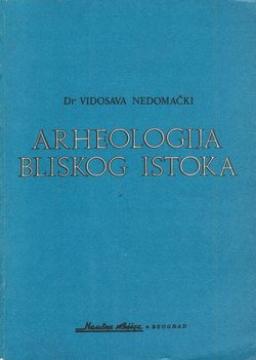
Arheologija Bliskog istoka
The manual of Vidosave Nedomáčki is a detailed overview of the cradle of civilization. Covers the material culture, architecture and art of ancient Mesopotamia, Egypt, the Levant and Persia from prehistory to antiquity.
The book Archaeology of the Near East (1981) by Dr. Vidosava Nedomački is a seminal work in the Croatian/Serbian language within the field of Near Eastern archaeology; it has long served as a university textbook and remains essential reading for students of archaeology, history, and art history. The work provides a comprehensive and systematic overview of the archaeological finds, cultures, and civilizations that developed in the Near and Middle East—a region rightly considered the cradle of human civilization. The author guides the reader—both chronologically and thematically—through key periods: from the Neolithic Revolution and the first sedentary communities, through the emergence of writing, monumental architecture, and the first city-states, to the powerful empires of antiquity. The regions of Mesopotamia (Sumer, Akkad, Babylon, Assyria), Ancient Egypt, the Levant (Canaan, Phoenicia, Palestine), as well as Asia Minor and Persia, are covered in detail. Through an analysis of architecture, sculpture, pottery, burial finds, and craft objects, Vidosava Nedomački elucidates the social, religious, and economic structures of ancient peoples. The book is distinguished by its scholarly precision, rich descriptions of archaeological sites, and a clear presentation of the influence Near Eastern cultures exerted on the development of Mediterranean and European civilizations.
One copy is available