Aretej
Through the parallel destinies of an ancient and a modern physician, Miroslav Krleža’s late drama dissects the motif of the intellectual caught between political repression, the horrors of war, and his own conscience.
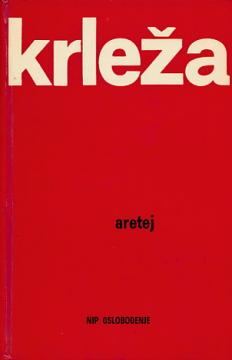
The drama Aretej ili Legenda o Svetačkom Otrovu (first published in 1959) is a late and exceptionally complex dramatic work by Miroslav Krleža. In it, the author returns to his major philosophical and conceptual themes: the intellectual's conflict with tyranny, the nature of power, the moral responsibility of the scientist, and the eternal recurrence of historical violence. Structurally complex, the drama intertwines two temporal planes: the Roman Empire in the 3rd century (an era of decadence and crisis under Emperor Severus) and the European reality on the eve of the Second World War (1938). The protagonist, the ancient physician Areteus, faces political pressures and the intrigues of a regime demanding he apply his medical knowledge for political and lethal ends. Through a parallel depiction of the fate of the modern physician Dr. A. G. Morgen, Krleža draws a timeless analogy regarding the position of humanists and thinkers within totalitarian systems. Rich in discursive dialogue, philosophical essayism, and the distinctive intellectual intensity characteristic of Krleža, Aretej represents the pinnacle of the author's post-war dramatic output and an essential work for understanding his philosophy of history and ethics.
One copy is available
- Damaged covers