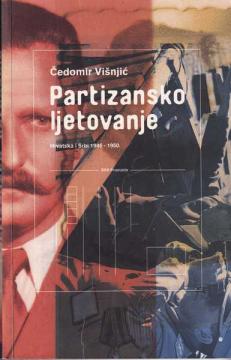
Partizansko ljetovanje: Hrvatska i Srbi 1945-1950.
Čedomir Višnjić’s book explores the position and fate of Serbs in Croatia in the immediate aftermath of World War II, analyzing political, social, and cultural conditions during the period from 1945 to 1950.
This work by the distinguished historian Čedomir Višnjić is a thorough and multi-layered study dedicated to one of the most sensitive periods in modern Croatian and Serbian history. Focusing on the pivotal years between 1945 and 1950, the author analyzes how the end of World War II, the establishment of the new communist regime, and the subsequent postwar reconstruction and ideological upheavals impacted the lives of Serbs in Croatia.
The title symbolically points to the contradictory nature of the era—caught between revolutionary zeal, the euphoria of victory, and the construction of a new system on the one hand, and deep trauma, wartime devastation, insecurity, and forced social changes on the other. Višnjić draws upon a wide range of archival documents, press reports, and interwar and postwar materials to shed light on the processes of integration as well as the challenges the Serb community faced in the new federal state, including issues of national identity, agrarian reform, cultural life, and political control.
The book offers a much-needed analytical departure from oversimplified interpretations and serves as essential reading for understanding the complex inter-ethnic relations and political dynamics in Croatia in the immediate aftermath of 1945.
One copy is available