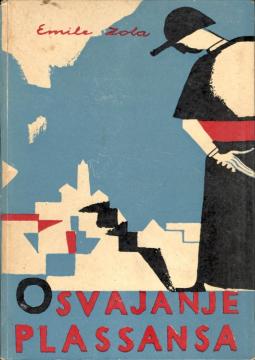
Osvajanje Plassansa
The arrival of the ambitious priest Faujas in provincial Plassans sparks a struggle for political and social supremacy, intertwining religious manipulation, family tragedy and the pursuit of power.
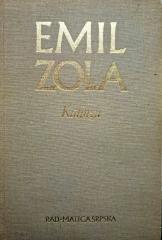
Osvajanje Plassansa (La Conquête de Plassans, The Conquest of Plassans) is a novel by French writer Émile Zola, originally published in 1874 as the fourth volume of his celebrated Rougon-Macquart series.
Set in the provincial French town of Plassans during the Second Empire, the novel follows the arrival of the mysterious and ambitious priest Ovide Faujas in the Mouret household. His presence triggers a series of events that gradually transform the town's political and social relationships. Exploiting religious authority, human weaknesses and rivalries between local political factions, Faujas systematically pursues his ambitions.
Meanwhile, the Mouret family undergoes a tragic disintegration marked by religious fanaticism, psychological pressure, manipulation and the loss of personal freedom.
Zola exposes the connections between political power, clerical influence and social opportunism, examining the mechanisms through which individuals and institutions establish dominance over a community.
A characteristic work of French naturalism, the novel combines psychological analysis with detailed social observation. Plassans becomes a microcosm of French society under Napoleon III, characterised by political conflict, hypocrisy and the struggle for influence.
One copy is available
- Blago oštećenje korica