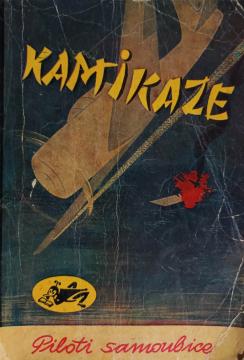
Kamikaze – Piloti samoubice

Kamikaze – Piloti samoubice

Vagenhals, known for his work on East Asian history and translations of Japanese texts, prepared this compilation as one of the first Yugoslav studies on the Japanese Tokkōtai special attack units in the final phase of the Pacific War.

Vagenhals dispels the myth of the “suicide fanatics”: many of the pilots (mostly students aged 19–22 from universities in Tokyo and Kyoto) were volunteers under pressure from the military hierarchy and bushidō culture, but also forcibly recruited due to lack of resources. The chronology begins with the concept at the Battle of Leyte (October 1944), where Admiral Takaji Onishi approved the tactic. It traces the organization: air (Ohka missiles), sea (Kaiten torpedoes) and ground (Shinyō boats, Fukuryu dive mines) units, with training of only 25–30 days instead of the standard 100.

The book describes the 11 main waves of attacks up to August 1945, with a focus on personal stories: the pilots wrote haiku poems, farewell letters to their families and tied hachimaki scarves like samurai. Vagenhals cites statistics: about 3,800 pilots killed (2,500 naval, 1,300 army), 368 Allied ships damaged/sunk (47 sunk), with an efficiency of 14–17%. The work also includes translations of orders, diaries, and analyses of Japanese propaganda.

Set in the context of 1955, after de-Stalinization and Yugoslav neutrality, the work neutrally illuminates war crimes and despair, avoiding sensationalism. This is a precursor to Vagenhals' later editions on the same subject, but the 1955 original remains a rarity, emphasizing the universal theme of sacrifice in totalitarian wars. Praised for its precision and humane approach.

Editor
Reuf Bravo
Graphics design
Slobodan Bogojević
Dimensions
16.5 x 11 cm
Pages
224
Publisher
Džepna knjiga, Sarajevo, 1955.
 
Latin alphabet. Paperback.
Language: Serbian.

Two copies are available

Copy number 1

Condition:Used, excellent condition

Copy number 2

Condition:Used, good condition (visible signs of use)
Damages or inconvenience notice:
  • Yellowed pages
  • Traces of patina
 

Are you interested in another book? You can search the offer using our search engine or browse books by category.

You may also be interested in these titles

Zračni desanti i građanska obrana

Zračni desanti i građanska obrana

Branko Injac
Izdavačko poduzeće "27. srpanj", 1954.
Croatian. Latin alphabet. Hardcover.
7.98
Kapetanova ratna sjećanja

Kapetanova ratna sjećanja

Stojan Vojnović

Stojan Vojnović (1920-1994), a Croatian writer, journalist and participant in the National Liberation War, in his memoirs Captain's War Memories (1983) provides a deep, introspective look at the war events of World War II in Yugoslavia.

Božidar Maslarić, 1983.
Croatian. Latin alphabet. Paperback.
4.32 - 4.34
Hrvatsko domobranstvo u Drugom svjetskom ratu

Hrvatsko domobranstvo u Drugom svjetskom ratu

Ivan Košutić

The book provides a detailed account of the development, organization, and operations of the Croatian Home Guard, the regular army of the Independent State of Croatia (NDH), in the period from 1941 to 1945.

Nakladni zavod Matice hrvatske, 1992.
Croatian. Latin alphabet. Hardcover with dust jacket.
11.56
Operacija Walküre

Operacija Walküre

Walther Kneip

The attempt to assassinate Adolf Hitler in 1944 in today's Germany is not exactly celebrated, regardless of the thousands executed, nor is the heroic undertaking of the one-armed war veteran Claus von Stauffenberg particularly glorified.

Zagrebačka naklada, 2008.
Croatian. Latin alphabet. Paperback.
7.26
Pijesak Orijenta

Pijesak Orijenta

Fitzroy MacLean

The memoir The Sands of the Orient (1949), part of the autobiographical work of the British diplomat, soldier and writer Fitzroy Maclean (1911–1996), describes his adventures in the diplomatic service and World War II.

Znanje, 1981.
Croatian. Latin alphabet. Paperback.
6.24
Hrvatska borba za opstojnost 1918.-1998.

Hrvatska borba za opstojnost 1918.-1998.

Milivoj Kujundžić, Zdravko Dizdar

The book contains an account of the history of Croatia from 1918 to 1998 in four historical periods (1918-1941; 1941-1945, 1945-1990 and 1990-1998).

Hrvatski državni sabor, 2000.
Croatian. Latin alphabet. Hardcover.
6.42