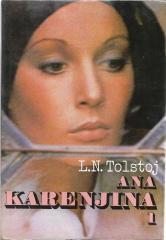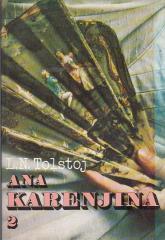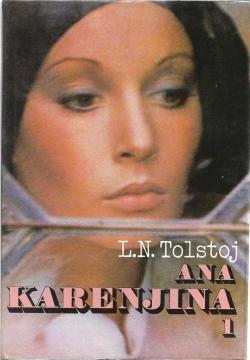
Ana Karenjina

Ana Karenjina

Lav Nikolajevič Tolstoj

As one of Tolstoy's greatest novels, the work combines psychological depth, realistic depiction of society, and philosophical themes. Anna is a literary icon, and the novel is a bridge between early realism and later moral reflections.

In 19th-century Russia, Anna Karenina, the beautiful and respected wife of high-ranking official Alexei Karenin, lives a seemingly perfect life. But a passionate affair with a young officer, Vronsky, changes everything. Anna Karenina (1875-1877), Leo Nikolayevich Tolstoy’s masterpiece, explores love, morality, and social norms.

Anna, trapped in a cold marriage, succumbs to her love for Vronsky. Their affair causes a scandal, and Anna abandons her husband and son, facing societal condemnation. As she struggles with jealousy and despair, her life descends into chaos. Vronsky, though in love, cannot satisfy her need for security. In parallel, the story follows Levin, a nobleman who searches for meaning in village life and his love for Kitty. His search for spiritual balance contrasts with Anna’s tragic fate. While Anna slides toward despair, Levin finds peace in family and faith.

The novel ends tragically for Anna, whose death symbolizes the impossibility of reconciling passion and social expectations. Levin, on the other hand, reveals a deeper meaning through simplicity and spirituality. Anna Karenina explores love, guilt, and the search for happiness, criticizing the hypocrisy of aristocracy and patriarchal norms.

As one of Tolstoy's greatest novels, the work combines psychological depth, realistic depiction of society, and philosophical themes. Praised for its style and complexity of characters, the novel gained immediate fame, although some criticized it for its length. Today, it is a masterpiece of world literature.

Übersetzung
Krunoslav Pranjić
Editor
Jakša Kušan
Titelseite
Alfred Pal
Maße
20 x 14 cm
Gesamtzahl der Seiten
893
Verlag
Nakladni zavod Matice hrvatske, Zagreb, 1979.
 
Latein Schrift. Fester Einband mit Schutzumschlag.
Sprache: Kroatisch.

Das Buch besteht aus zwei Bänden.

Angeboten wird ein Exemplar.

Zum Warenkorb hinzugefügt!

Ana Karenjina
Der erste Band
Seitenzahl: 461
Zustand:Gebraucht, in ausgezeichnetem Zustand
Ana Karenjina
Der zweite Band
Seitenzahl: 432
Zustand:Gebraucht, in ausgezeichnetem Zustand
 

Interessieren Sie sich für ein anderes Buch? Sie können das Angebot über unsere Suchmaschine suchen und finden oder Bücher nach Kategorien durchsuchen.

Diese Titel könnten Sie auch interessieren

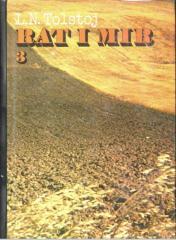
Rat i mir 3

Rat i mir 3

Lav Nikolajevič Tolstoj
Nakladni zavod Matice hrvatske, 1979.
Kroatisch. Latein Schrift. Fester Einband mit Schutzumschlag.
5,98
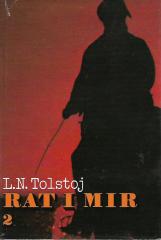
Rat i mir 2

Rat i mir 2

Lav Nikolajevič Tolstoj
Nakladni zavod Matice hrvatske, 1979.
Kroatisch. Latein Schrift. Fester Einband mit Schutzumschlag.
5,98
Krivotvoreni kupon i druge pripovijesti

Krivotvoreni kupon i druge pripovijesti

Lav Nikolajevič Tolstoj

Priče „Jutro jednog plemića“, „Iz beleški kneza Nehludova“, „Markerove beleške“, „Vaga“, „Dva husara“, „Kavkaski zarobljenik“, „Falsifikovani kupon“, „Smrtne beleške starca Fjodora Kuzmiča“ i „Zašto?“ istražuju teme morala, društva i duhovnosti.

Nakladni zavod Hrvatske, 1979.
Kroatisch. Latein Schrift. Fester Einband mit Schutzumschlag.
5,624,22
Zagrepčanka

Zagrepčanka

Branislav Glumac

Branislav Glumac je 1974. godine objavio roman bez tačaka i zareza, kao neumoljivi tok misli mladog buntovnika. Objavljeno u socijalističkoj Jugoslaviji, delo je izazvalo skandal svojom otvorenošću i postalo klasik o generacijskoj pobuni.

IROS, 1986.
Kroatisch. Latein Schrift. Hardcover.
8,22 - 8,24
Tri mušketira 1-2

Tri mušketira 1-2

Alexandre Dumas

Dimina verzija priče prikazuje avanture d'Artanjana i njegovih prijatelja od 1625. do 1628. godine.

Epoha, 1966.
Kroatisch. Latein Schrift. Fester Einband mit Schutzumschlag.
Das Buch besteht aus zwei Bänden
9,48
Usta puna zemlje

Usta puna zemlje

Branimir Šćepanović

Roman „Usta puna zemlje“ (1970), remek-delo srpskog pisca Branimira Šćepanovića, psihološki je dubinski istraživač granica ljudske duše, samoće i egzistencijalne slobode, podsećajući na Kafku i Kamija.

BIGZ, 1987.
Serbisch. Latein Schrift. Taschenbuch.
3,96 - 3,98