Émile Zola
Émile Zola (1840–1902) was one of the most important French writers and the founder of naturalism in literature. He was born in Paris and spent his childhood in Aix-en-Provence. After the death of his father, the family fell into poverty, which strongly influenced his later work.
Zola began his career as a journalist and literary critic, and gained international fame with the extensive novel "Thérèse Raquin" (1867), with which he announced the naturalistic approach - the depiction of people as products of heredity and social conditions. The largest part of his work is the cycle "Rougon-Macquart" (1871–1893), consisting of 20 novels, in which he depicts French society during the Second Empire through the fates of one family. Among the most famous works of the cycle are "Germinal", "L'Etre", "Nana" and "Les Puppies".
Zola is also known for his political involvement, especially in the Dreyfus affair, when he defended the unjustly convicted Jewish officer Alfred Dreyfus with an open letter "I Accuse!" (J'Accuse!, 1898). In doing so, he demonstrated his commitment to truth, justice, and human rights, risking his own freedom and reputation.
Zola died in Paris in 1902, under suspicious circumstances – possibly from carbon monoxide poisoning. His work remains the foundation of French naturalism and a lasting inspiration for literature and social thought.
Naslovi u ponudi
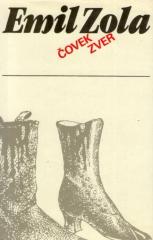
Čovek zver
Die Hauptfigur, Etienne Rouen, stellt die archetypische Figur eines modernen Mannes dar, dessen Charakter von innerer Brutalität geprägt ist.
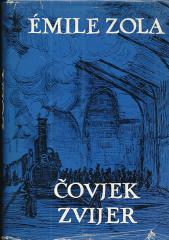
Čovjek zvijer
Der Roman untersucht die zerstörerischen Kräfte von Erbe, Leidenschaft und Gewalt in der modernen Industriegesellschaft. Die Handlung spielt sich größtenteils auf der Eisenbahn ab, einem Symbol für Geschwindigkeit, Schicksal und unausweichlichen Untergang

Germinal
Ein Roman, der den Höhepunkt des literarischen Schaffens eines der bedeutendsten Vertreter des Naturalismus in der Literatur darstellt.
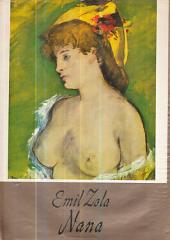
Nana
The novel "Nana" by Emil Zola is a story about false love, about feigned passion and lust, greed and all emotions related to possessing material things. Everything is embodied in the figure of a woman, possessed of all the vices that society condemns.
Slom
"Breakdown" is a powerful and emotional depiction of war events, but at the same time a deep reflection on human destiny and collective experience.
Stranica ljubavi
The novel "The Page of Love" by Émil Zola follows the life of a young widow and a doctor, who are brought together by the illness of the widow's twelve-year-old daughter.
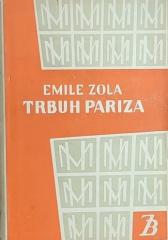
Trbuh Pariza
U dubokoj tišini, kola s povrćem išla su pustoj širokom ulicom ka Parizu; točkovi su ritmično zveckali i njihova jeka udarala je u frontove kuća koje su zaspale sa obe strane iza nejasnih linija brestova.