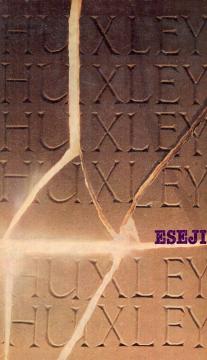
Eseji: Vrata percepcije / Pakao i raj / Ludost, pakost, žalost / Najčudnija znanost

Eseji: Vrata percepcije / Pakao i raj / Ludost, pakost, žalost / Najčudnija znanost

Aldous Huxley

"Essays" by Aldous Huxley is a collection of four key texts that reveal the depth of Huxley's thinking on consciousness, art, science, and literature.

The first essay, "The Doors of Perception" (1954), describes Huxley's psychoactive experience with mescaline. The author reveals how the drug breaks down the mind's filters, opening "doors of perception" to a metaphysical reality, where everyday objects take on a transcendent depth. Huxley connects this to mystical traditions and art, criticizing the materialistic understanding of the mind.

The sequel, "Hell and Heaven" (1956), explores extreme visions of the mind: paradisiacal hallucinations and hellish nightmares in the history of religion, art, and drug-induced states. Huxley analyzes how artists such as Blake and Van Gogh achieve such states, warning of the dangers and potential of expanded consciousness.

In "Madness, Malice, Sorrow," Huxley discusses pathological aspects of the human psyche—madness as an escape from reality, malice as a destructive force, and sorrow as existential pain. The essays call for compassion and understanding of these states through philosophy and literature.

"The Strangest Science" deals with the limits of empirical science, exploring parapsychology, mysticism and unconventional phenomena as a "strange" branch of knowledge that transcends materialism.

The final text, "Scientific Typology in Huxley's Novels of Ideas" (author Matej Mužina), critically analyzes Huxley's works such as "The Wonderful New World" and "The Island", classifying them according to scientific paradigms and ideational structures, emphasizing predictions about technology and society.

Naslov originala
Collected Essays
Prevod
Maja Šoljan, Tomislav Pisk, Davor Slaming
Urednik
Franjo Profeta
Ilustracije
Petar Dabac
Naslovnica
Nenad Dogan
Dimenzije
21 x 13 cm
Broj strana
208
Izdavač
August Cesarec, Zagreb, 1980.
 
Latinica. Tvrde korice s omotom.
Jezik: Hrvatski.

Jedan primerak je u ponudi

Stanje:Korišćeno, u vrlo dobrom stanju
Oštećenja / nepogodnosti:
  • The cover is missing
Dodato u korpu!
 

Zanima Vas i neka druga knjiga? Možete pretražiti našu ponudu pomoću pretrage ili prelistati knjige po kategorijama.

Možda će Vas zanimati i ovi naslovi

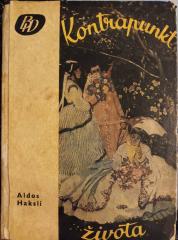
Kontrapunkt života

Kontrapunkt života

Aldous Huxley

Point Counter Point (1928) is Huxley's longest and most complex novel, inspired by musical counterpoint, where the story develops through interwoven plots and parallel plots, switching abruptly between characters and themes.

Svjetlost, 1961.
Srpski. Latinica. Tvrde korice.
Knjiga se sastoji od dva toma
3,26 - 7,99
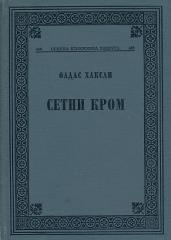
Setni Krom

Setni Krom

Aldous Huxley
Srpska književna zadruga (SKZ), 1974.
Srpski. Ćirilica. Tvrde korice.
6,82
Historijska čitanka 2

Historijska čitanka 2

Miljenko Jergović

The first edition of the second part of the series with 5 new (bonus) stories by a famous writer and journalist. "This book completes the 'Historical Reader', a project - a column started on the pages of the Sarajevo magazine Dani, shortly after the end o

Durieux, 2004.
Hrvatski. Latinica. Tvrde korice.
7,325,49
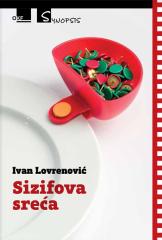
Sizifova sreća - razgovori, kronike

Sizifova sreća - razgovori, kronike

Ivan Lovrenović

Ivan Lovrenović's collection documents thirty years of change in Bosnia and Herzegovina through interviews, essays, and dialogues. The author, a witness to the era, examines old attitudes in the new reality, emphasizing the atrophy of rationality and soci

Synopsis, 2018.
Hrvatski. Latinica. Broširano.
12,54
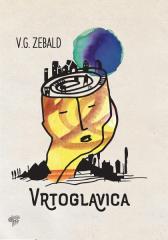
Vrtoglavica

Vrtoglavica

Winfried G. M. Sebald

Sebald is not just a storyteller. His narrative process offers a model of consciousness that tells us: to be fully aware of oneself is to suffer from incurable vertigo.

Plato, 2020.
Srpski. Latinica. Broširano.
6,52
Poezija i zbilja

Poezija i zbilja

Johann Wolfgang Goethe

Goethe's greatest autobiographical prose, written between 1811 and 1833, covers his life from his birth in 1749 in Frankfurt to 1775, when he went to Weimar at the invitation of Duke Karl August.

Matica hrvatska, 1953.
Hrvatski. Latinica. Tvrde korice s omotom.
18,42