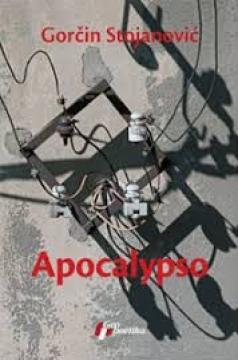
Apocalypso

Apocalypso

Gorčin Stojanović

Apocalypso is a collection of prose texts (short stories, essays, feuilletons, lyrical fragments) by the famous Serbian director, screenwriter and critic Gorčin Stojanović (b. 1966).

The texts were written between 1997 and the spring of 2000; the first was inspired by the second album of the band Haustor, and the last ends with the spirit of depleted Belgrade (a comparison with depleted uranium). The third part of the book has not been published before.

The title combines "apocalypse" and "calypso" - the end of the world with dance, ironic rhythm and nostalgic exile. Stojanović writes about transitional Serbia in the 90s: the shadows of war, cultural poverty, urban decay, media hysteria, artistic impotence and personal fractures. The language is precise, cynical, poetically charged - a mixture of black humor, irony and melancholy.

The collection is an intimate portrait of a generation that lived at the end of a world: Belgrade as a labyrinth of time, where the past and the present collide in chaos. The texts are connected by emotions - from music and film to everyday absurdity - and read like a lyrical diary of an intellectual in the war and the post-war period.

Regarded as one of the most authentic prose pieces about the 90s in Serbia – not pathetic, but lucid and bitter, with a touch of rock'n'roll energy and cinematic rhythm. The book is rare in second-hand stores, but remains an important voice about the "apocalyptic dance" of transition.

Urednik
Jasna Novakov Sibinović
Ilustracije
Jovan Čekić
Dimenzije
20 x 13 cm
Broj strana
119
Izdavač
Geopoetika, Beograd, 2007.
 
Latinica. Broširano.
Jezik: Srpski.

Jedan primerak je u ponudi

Stanje:Nekorišćeno
Dodato u korpu!
 

Zanima Vas i neka druga knjiga? Možete pretražiti našu ponudu pomoću pretrage ili prelistati knjige po kategorijama.

Možda će Vas zanimati i ovi naslovi

Put u Balkaniju

Put u Balkaniju

Zoran Vukman

The collection of columns, Put u Balkanija, critically reflects on Croatian reality at the turn of the millennium. Through satire and philosophical reflection, the author dissects social problems, warning of the dangers of "Balkanization" and calling for

Verbum, 2001.
Hrvatski. Latinica. Broširano.
9,36
Hladni rat: Brevijar nefikcijske književnosti

Hladni rat: Brevijar nefikcijske književnosti

Muharem Bazdulj

Zbirka odabranih nefikcijskih tekstova (eseji, kritike, eseji) napisanih između 2005. i 2019. godine. Četiri dela: teme Hladnog rata, putopisi, književne refleksije i savremeni eseji. Dubinski uvidi u kulturu, istoriju i identitet Balkana i sveta.

Službeni glasnik, 2019.
Hrvatski. Latinica. Broširano.
6,32
Oslovljavanje davnih riječi

Oslovljavanje davnih riječi

Ivan Šarčević

Knjiga je zbirka kolumni koje je Ivan Šarčević, bosanski franjevac, teolog, profesor pastoralne teologije i katiheze, pisao tokom proteklih pet godina za Vjesnik Franjevačkog samostana Svetog Luke u Jajcu.

Franjevački samostan sv. Luke, 2017.
Hrvatski. Latinica. Broširano.
9,987,98
Glosarij

Glosarij

Jevrem Brković

Glosarij je rečnik koji tumači nepoznate i nejasne reči i pojmove, a „Glosarij“ Jevrema Brkovića je mnogo više od toga. Reč je o zbirci kratkih tekstova pisanih u polemičkom i feljtonskom stilu, koji ima i autobiografski pečat.

Aurora, 1996.
Hrvatski. Latinica. Broširano.
4,62
Odbrojavanje

Odbrojavanje

Tena Štivičić

Tenas Kolumnen sind vor allem clever. und gleich danach die lustigen. Sie räumt mit Klischees über Kolumnisten auf, denn ihr Interesse gilt nicht Sex, Schuhen, Cocktails und populärer Psychologie, es sei denn, sie befasst sich phänomenologisch mit solchen

Profil International, 2009.
Hrvatski. Latinica. Broširano.
4,26 - 5,98
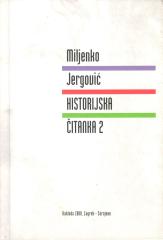
Historijska čitanka 2

Historijska čitanka 2

Miljenko Jergović

Die erste Ausgabe des zweiten Teils der Reihe mit 5 neuen (Bonus-)Geschichten eines bekannten Schriftstellers und Journalisten. „Dieses Buch vervollständigt den ‚Historischen Leser‘, ein Projekt – eine Kolumne, die kurz nach Kriegsende in der Sarajevoer Z

Durieux, 2004.
Hrvatski. Latinica. Tvrde korice.
7,32