Ruski formalizam i književna istorija

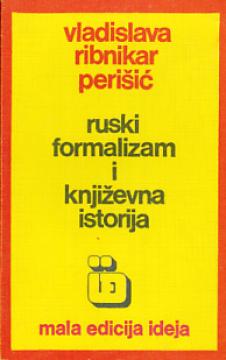
Ruski formalizam i književna istorija

Vladislava Ribnikar-Perišić

The study analyzes the contribution of Russian Formalism to literary history, exploring the evolution of literary forms, the succession of movements, the theory of literary development, and the specific methodology of the formal approach.

The work by Vladislava Ribnikar-Perišić titled Russian Formalism and Literary History (1976) analyzes one of the most influential theoretical movements in 20th-century literary studies. The author explores how Russian Formalists—such as Yuri Tynyanov, Viktor Shklovsky, and Boris Eichenbaum—redefined the concept of literary history and proposed a new methodology for understanding literary development. Instead of viewing literature through traditional biographical, sociological, or psychological frameworks, the Formalists focus on the autonomy of the literary work and the internal dynamics of the forms themselves. The study places particular emphasis on Tynyanov’s theory of literary evolution, in which literary history is viewed not as a simple chronological sequence, but as a constant struggle and succession of literary systems and devices. Ribnikar-Perišić details the concept of "defamiliarization" (ostranenie), the role of parody in disrupting ossified forms, and the relationship between literary normativity and innovation. The study offers valuable insight into how Russian Formalism bridged the gap between the synchronic study of texts and the diachronic tracking of literary processes.

Urednik
Milutin Stanisavac
Dimenzije
16 x 10 cm
Broj strana
272
Izdavač
Predsedništvo Konferencije Saveza socijalističke omladine Jugoslavije, Beograd, 1976.
 
Tiraž: 3.000 primeraka
 
Latinica. Broširano.
Jezik: Srpski.

Jedan primerak je u ponudi

Stanje:Korišćeno, u dobrom stanju (tragovi korišćenja)
Oštećenja / nepogodnosti:
  • Damaged back
Dodato u korpu!
 

Zanima Vas i neka druga knjiga? Možete pretražiti našu ponudu pomoću pretrage ili prelistati knjige po kategorijama.

Možda će Vas zanimati i ovi naslovi

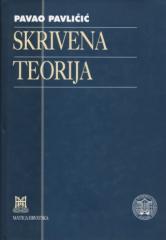
Skrivena teorija

Skrivena teorija

Pavao Pavličić

Pavle Pavličić's hidden theory was included among the ten best domestic nonfiction books in 2006 in the "Jutarnje lista" selection.

Matica hrvatska, 2006.
Hrvatski. Latinica. Tvrde korice s omotom.
11,98
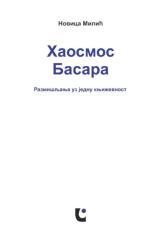
Haosmos Basara

Haosmos Basara

Novica Milić

Novica Milić gives Basara the status he deserves - he reads him as a relevant world writer. He "pulls" it out of the bilge of the palanquin and places it on the stage of world literature, where only one thing matters: what and how the writer does with wor

Factum izdavaštvo, 2020.
Srpski. Ćirilica. Broširano.
9,56
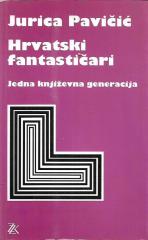
Hrvatski fantastičari: Jedna književna generacija

Hrvatski fantastičari: Jedna književna generacija

Jurica Pavičić

This is one of the first synthetic analyses of the so-called Croatian fantasy generation (or "Borgesians", "young prose" with elements of fantasy) that appeared in the late 1960s and during the 1970s.

Zavod za znanost o književnosti Filozofskoga fakulteta, 2000.
Hrvatski. Latinica. Broširano.
9,72
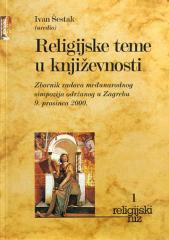
Religijske teme u književnosti (zbornik radova međunarodnog simpozija održanog u Zagrebu 9. prosinca 2000. )

Religijske teme u književnosti (zbornik radova međunarodnog simpozija održanog u Zagrebu 9. prosinca 2000. )

Ivan Šestak

Leider wurde die Kunst (insbesondere die Literatur) im Laufe der Zeit, zumindest in der europäischen Geschichte, zu einem separaten Bereich des kulturellen Lebens, getrennt sowohl von der Religion als auch von der Welt der ethischen (humanen) Werte.

Filozofsko-teološki institut Družbe Isusove, 2001.
Hrvatski. Latinica. Broširano.
5,724,00
Tajne zanata

Tajne zanata

Pavao Pavličić

Jednostavno i bez mistifikacije, Pavličić otkriva tajne svoga zanata koje će, ovako otkrivene, možda nekima pomoći da se i sami okušaju u pisanju.

Mozaik knjiga, 2021.
Hrvatski. Latinica. Broširano.
9,98
Govorna interpretacija umjetničkoga teksta

Govorna interpretacija umjetničkoga teksta

Novak Novaković

Die gesprochene Interpretation eines künstlerischen Textes entsteht aus dem Wunsch des Einzelnen, den Text einer künstlerischen Figur als eigene Erfahrung verbal künstlerisch zu gestalten. Dieses Handbuch zum interpretierenden Lesen und Rezitieren wird da

Školska knjiga, 1980.
Hrvatski. Latinica. Tvrde korice.
6,624,63