Krivotvoritelji novca

Krivotvoritelji novca

Andre Gide

The Counterfeiters (1925) is an intellectually challenging novel, appreciated for its philosophical depth and courage. Written as an experimental "novel within a novel", Gide breaks with traditional narrative, offering a multi-layered reflection on authen

The plot follows several adolescents and adults whose lives intertwine. Bernard Profitendieu, a rebellious young man, discovers that he is not his father's son and leaves home, searching for his own identity. His friend Olivier Molinier struggles with family expectations and his attraction to an older writer, Édouard, who is writing a novel of the same title, The Counterfeiters of Money, creating a metanarrative. Édouard's quest for pure art mirrors Gide's own struggle with creativity, while characters like Bernard and Olivier test the limits of morality, sexuality, and freedom.

The novel explores "counterfeiting" in a metaphorical sense—false morality, social norms, and artistic compromise—as the characters struggle to find authenticity in a world full of deception. Gide uses diary entries, letters, and dialogue, creating a fragmented structure that reflects the chaos of youth and intellectual pursuits. Gide's style, imbued with irony and psychological acumen, makes it a key work of modernism, inviting readers to question truth and freedom.

Original title
Les faux-monnayeurs
Translation
Dane Smičiklas
Dimensions
21 x 12.5 cm
Pages
350
Publisher
Jutarnji list, Zagreb, 2004.
 
Latin alphabet. Hardcover with dust jacket.
Language: Croatian.
ISBN
978-9-53716-017-3

Multiple copies are available

Copy number 1

Condition:Unused

Copy number 2

Condition:Used, excellent condition

Copy number 3

Condition:Used, excellent condition

Copy number 4

Condition:Unused
 

Are you interested in another book? You can search the offer using our search engine or browse books by category.

You may also be interested in these titles

Bajke, kraljevi, lupeži

Bajke, kraljevi, lupeži

Darko Macan, Ludwig Bauer, Igor Štiks, Želimir Periš, Zoran Pongrašić, Boris Perić i Roman Simić

Fairy tales, kings, thieves – the second in a series of story collections intended for an adult audience.

Kreativna mreža, 2022.
Croatian. Latin alphabet. Paperback.
10.00
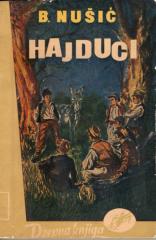
Hajduci

Hajduci

Branislav Nušić

The novel Hajduci by Branislav Nušić is a humorous story about a group of boys from a small town who, inspired by stories about hooligans, founded their own group and got into various mischief.

Džepna knjiga, 1959.
Croatian. Latin alphabet. Paperback.
4.00
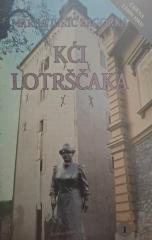
Kći Lotrščaka

Kći Lotrščaka

Marija Jurić Zagorka

In addition to the love story, which is the backbone of almost all of Zagorka's works, "The Daughter of Lotrščak" is a novel that is unique in that it abounds in numerous legends and folk tales related to Zagreb, based on supernatural and religious motifs

Katarina Zrinska.
Croatian. Latin alphabet. Paperback.
4.00
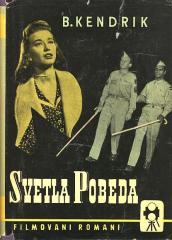
Svetla pobeda

Svetla pobeda

Baynard Kendrick

Kendrick writes in a dynamic and tense style, with plenty of dialogue and twists, which keeps the reader interested until the very end. The title "Lights of Victory" symbolizes hope and success after difficult trials.

Kosmos, 1956.
Serbian. Latin alphabet. Hardcover with dust jacket.
5.00
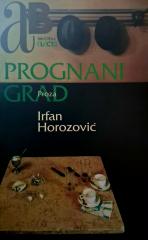
Prognani grad

Prognani grad

Irfan Horozović

The novel does not offer a classic plot with a clear beginning and end, but rather acts as a series of internal images and feelings, further emphasizing the scattered nature of the world it describes.

Aktant d. o. o., 1994.
Croatian. Latin alphabet. Paperback.
5.90
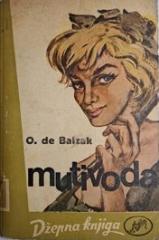
Mutivoda

Mutivoda

Honore de Balzac

Mutivoda is a novel from Balzac's great cycle "The Human Comedy" (La Comédie humaine). The action takes place in the small provincial town of Arcis-sur-Aube, where the election for a parliamentary representative is triggered by the arrival of a mysterious

Svjetlost, 1960.
Croatian. Latin alphabet. Paperback.
3.00