Dnevnici, 2. svezak: 1912-1914.

Dnevnici, 2. svezak: 1912-1914.

Franz Kafka

The second volume of Kafka's diaries covers the crucial years 1912–1914. This volume is a bridge between the early sketches and the mature novels, and the fragments are raw, aphoristic, full of self-mutilation, but also ingenious introspection.

These fragments, written in the night hours between office work and insomnia, reveal Kafka's inner hell: "Life is a dream, and I am a dreamer who cannot wake up."

The year 1912 culminates in a meeting with Felice Bauer in Berlin - a "virgin in a shirt" who hypnotizes but also paralyzes him. The diary monologues about the dream ("One night in four pages... and it's all over") describe the writing of "The Judgment" as a birth: a story of filial guilt and fatherly judgment, inspired by Felice. The letters become an obsession for her - "You are my truth, I am your lie." She thinks of marriage as an escape from herself: "Marriage is salvation, but I am a condemned man."

1913 brings trips to the Riva and Paris, where she confronts corporeality: "The body is a prison, the soul is a prisoner." Dreams of crowding, persecution and incest reveal deep suffering - the shadow of her father dominates, foreshadowing "Letter to Father." Jewish identity is awakened through visits to synagogues and reflections on assimilation: "We Jews are spirits without bodies." Sketches like "The Great Wall of China" herald metaphysical allegories.

The year 1914, on the eve of the Great War, brings mobilization – Kafka reports, but is released due to poor health. He sees the war as a metaphor for his life: "The world is falling apart, and I stand in ruins." Love with Felice disintegrates in another period of reverie, with doses of humor: "I am an ant, she is a mountain." Themes: alienation, lack of communication, writing as the only way out – "A book must be an axe for the frozen sea within us."

Titel des Originals
Tagebücher
Übersetzung
Nadežda Čačinović
Editor
Dijana Bahtijari
Maße
20,5 x 14 cm
Seitenzahl
226
Verlag
Tim press, Zagreb, 2022.
 
Latein Schrift. Taschenbuch.
Sprache: Kroatisch.

Angeboten wird ein Exemplar

Zustand:Ungebraucht
Zum Warenkorb hinzugefügt!
 

Interessieren Sie sich für ein anderes Buch? Sie können das Angebot über unsere Suchmaschine suchen und finden oder Bücher nach Kategorien durchsuchen.

Diese Titel könnten Sie auch interessieren

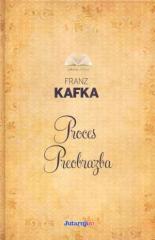
Proces / Preobrazba

Proces / Preobrazba

Franz Kafka

The Process is a novel by Franz Kafka, written between 1914 and 1915 and published in 1925. The transformation is a short story by Franz Kafka, first published in 1915, and certainly his most famous work, along with the novels The Process and The Castle.

Europapress holding, 2008.
Kroatisch. Latein Schrift. Hardcover.
5,64
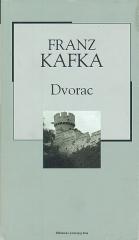
Dvorac

Dvorac

Franz Kafka

The Castle is Franz Kafka's last novel. In it, the protagonist known only as "K." he arrives in the village and struggles to gain access to the mysterious authorities who rule it from a castle supposedly owned by Count Westwest.

Jutarnji list, 2004.
Kroatisch. Latein Schrift. Fester Einband mit Schutzumschlag.
4,99 - 5,22
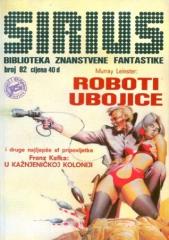
Sirius: Biblioteka znanstvene fantastike - broj 82

Sirius: Biblioteka znanstvene fantastike - broj 82

Murray Leinster, Damir Bajs, Miroslav Bošnjaković, Rastislav Durman, Krunoslav Gernhard, Jakob Z....

Sirius war ein kroatisches Science-Fiction-Magazin. Die Gründung wurde 1976 von Damir Mikuličić vorgeschlagen. In Sirius wurden Werke inländischer Autoren sowie Übersetzungen ausländischer Science-Fiction-Autoren veröffentlicht. Es wurde von 1976 bis 1989

Vjesnik, 1983.
Kroatisch. Latein Schrift. Taschenbuch.
3,46 - 3,48
Juda

Juda

Amos Oz

Through the story of a young man at a crossroads in his life, Amos Oz presents a provocative idea about Christianity and traitors, does not ignore the high cost of the Israeli-Arab conflict, and his call for compassion melts the hearts of readers.

Fraktura, 2016.
Kroatisch. Latein Schrift. Fester Einband mit Schutzumschlag.
11,56
Ništarija

Ništarija

Isaac Bashevis Singer

The novel in the form of a monologue confession asks the question: is the escape from modernity into rigid fundamentalism salvation or a new kind of prison? Singer does not give a clear answer, but through Shapiro's passionate defense of penance, he criti

Mladost, 1991.
Kroatisch. Latein Schrift. Fester Einband mit Schutzumschlag.
9,34