Žena koja je slikala kanom

Žena koja je slikala kanom

Alka Joshi

"The Woman Who Painted with Henna" is the debut novel of Indian-American author Alka Joshi, the first part of the Jaipur trilogy. The novel has been praised for its authentic portrayal of Rajasthani culture and the universal theme of female emancipation.

The story takes place in 1950s India, in the vibrant pink city of Jaipur after independence. The main character, Lakshmi Shastri, a talented henna (mehndi) artist, flees an arranged, violent marriage from a rural village at the age of 17. She arrives in Jaipur alone, where, with great effort and skill, she works her way up to the top: becoming the most sought-after henna artist and a trusted advisor to wealthy upper-class women – maharajahs, politicians and business families.

Through detailed descriptions of Indian customs, the caste system, female solidarity and the clash of tradition with modernization, Joshi depicts Lakshmi’s struggle for independence, financial security and a home of her own. Lakshmi is smart, ambitious and pragmatic – she uses her henna art (which symbolises beauty, happiness and feminine strength) to build a career, but she hides secrets from her past. When her younger sister Radha appears, and then her ex-husband, the conflicts escalate, revealing layers of family trauma, betrayal and forgiveness.

The novel is rich in sensory details: the scents of spices, the colors of saris, the rituals of henna nights, the contrast of poverty and luxury. The style is lively, emotional and empowering – a focus on female strength, self-awareness and the fight against patriarchy in transitional India. There is no pathos, but a realistic depiction of ambition and the price of freedom. Sequels: “The Secret Keeper of Jaipur” and “Six Days in Bombay”.

Original title
The Henna Artist
Translation
Vesna Valenčić
Editor
Hana Vulić
Graphics design
Eva Vidmar
Dimensions
20 x 14 cm
Pages
366
Publisher
Mozaik knjiga, Zagreb, 2021.
 
Latin alphabet. Paperback.
Language: Croatian.

One copy is available

Condition:Used, excellent condition
 

Are you interested in another book? You can search the offer using our search engine or browse books by category.

You may also be interested in these titles

Topaz

Topaz

Leon Uris

Topaz is a Cold War suspense novel by Leon Uris, published in 1967 by McGraw-Hill. The novel spent one week atop The New York Times Best Seller List, and was Uris's first New York Times number-one bestseller since Exodus in 1959.

Otokar Keršovani, 1970.
Croatian. Latin alphabet. Hardcover with dust jacket.
8.68
Portret jedne ledi

Portret jedne ledi

Henry James

One of James' most popular novels and considered by critics to be one of his best. Portrait of a Lady is a subtle examination of Victorian society and power relations, providing a groundbreaking psychological study of its protagonist.

Narodna knjiga, 1983.
Croatian. Latin alphabet. Hardcover with dust jacket.
8.26
Rakova obratnica

Rakova obratnica

Henry Miller

This is an accusation, a slander, a personal insult. This is not a book, in the ordinary sense of the word. No, this is a continuous insult, a spit in the face of Art, a foot in the tur against God, Man, Fate, Time, Love, Beauty...whatever you want.

Šareni dućan, 2006.
Croatian. Latin alphabet. Paperback.
11.46
Car oceanskog perivoja

Car oceanskog perivoja

Stephen L. Carter

Stephen L. Carter's first novel is a suspenseful story about the well-off black Garland family. It is a novel about contemporary American society seen through the eyes of a member of the black middle class.

Algoritam, 2002.
Croatian. Latin alphabet. Hardcover.
9.32
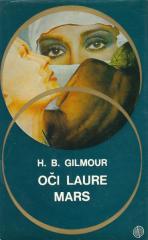
Oči Laure Mars

Oči Laure Mars

H. B. Gilmour

Fashion photographer Laura is gaining fame by shooting her exclusive models, full of erotic charge, on the streets of the metropolis, where violence and crime reign.

Grafički zavod Hrvatske (GZH), 1979.
Croatian. Latin alphabet. Hardcover with dust jacket.
3.96 - 4.12
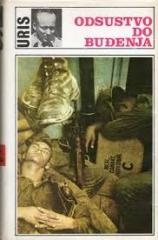
Odsustvo do buđenja

Odsustvo do buđenja

Leon Uris

„Odsustvo do buđenja“ (1953) je debitantski roman Leona Urisa zasnovan na njegovom iskustvu u Drugom svetskom ratu kao pripadnika 6. marinskog puka.

Otokar Keršovani, 1970.
Croatian. Latin alphabet. Hardcover with dust jacket.
8.246.18