Quo vadis?

Quo vadis?

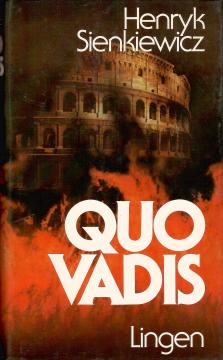
Henryk Sienkiewicz

The novel Quo Vadis depicts the love between the Roman patrician Marcus Vinicius and the Christian Lygia during the reign of Emperor Nero, and the conflict between the cruelty of the Roman Empire and Christian values.

Quo vadis? by Henryk Sienkiewicz is a historical novel set in Rome during the reign of Emperor Nero. The main character is a young Roman patrician Marcus Vinicius who falls in love with Lygia, a girl raised in the Christian faith. To win her over, he initially uses his position and power, but gradually changes under the influence of her kindness and Christian principles. Petronius, Vinicius' uncle, known for his intelligence, sophistication, and critical attitude towards the emperor's court, also plays an important role. Opposite him stands the cruel emperor Nero, whose vanity and desire for glory lead to the persecution of Christians after the Great Fire of Rome.

The novel faithfully depicts the luxury and moral decline of Roman society and contrasts violence, arrogance, and political intrigue with faith, love, and forgiveness. The scenes of the persecution of Christians in the arena are particularly impressive, where many would rather accept death than renounce their beliefs. Vinicius eventually completely changes his outlook on life and, together with Lygia, finds happiness in a new faith.

Through their fates, Sienkiewicz shows how love, faith, and sacrifice can overcome hatred and violence. The German translation retains the rich description of the historical setting and convincingly conveys the drama of the plot and the development of the main characters.

Übersetzung
Paul Seliger
Maße
21 x 13 cm
Seitenzahl
471
Verlag
Helmut Lingen Verlag, Köln, 1977.
 
Latein Schrift. Fester Einband mit Schutzumschlag.
Sprache: Deutsch.

Angeboten wird ein Exemplar

Zustand:Ungebraucht
Zum Warenkorb hinzugefügt!
 

Interessieren Sie sich für ein anderes Buch? Sie können das Angebot über unsere Suchmaschine suchen und finden oder Bücher nach Kategorien durchsuchen.

Diese Titel könnten Sie auch interessieren

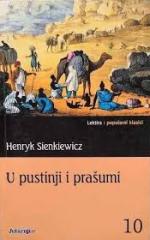
U pustinji i prašumi

U pustinji i prašumi

Henryk Sienkiewicz

Staś Tarkowski and little Nel Rawlinson are kidnapped during the Mahdi's rebellion in Africa. The children flee through the Sahara Desert and the rainforest, facing danger, hunger, and wild animals.

Jutarnji list, 2004.
Kroatisch. Latein Schrift. Taschenbuch.
4,82 - 5,26
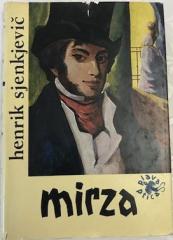
Mirza

Mirza

Henryk Sienkiewicz
Mlado pokolenje, 1967.
Serbisch. Latein Schrift. Fester Einband mit Schutzumschlag.
3,98 - 3,99
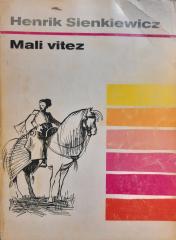
Mali vitez

Mali vitez

Henryk Sienkiewicz
Mladinska knjiga, 1974.
Slowenisch. Latein Schrift. Taschenbuch.
3,84
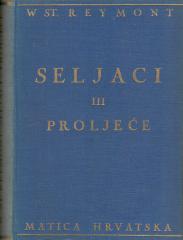
Seljaci III: Proljeće

Seljaci III: Proljeće

Władysław Stanisław Reymont

The third part of the epic tetralogy The Peasants. Spring brings the awakening of nature, but also new conflicts in the village of Lipce: the culmination of a love triangle, family drama and social tensions. The continuation of Nobel's epic of Polish peas

Matica hrvatska, 1934.
Kroatisch. Latein Schrift. Hardcover.
7,32 - 23,54 (sammlung)
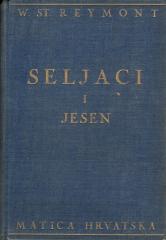
Seljaci I: Jesen

Seljaci I: Jesen

Władysław Stanisław Reymont

Prvi dio epske tetralogije o životu poljske seoske zajednice u selu Lipce. Roman prikazuje ritam seoskih radova, svakodnevicu, intrige, sukobe oko zemlje i moći te brak starog bogatog seljaka Macieja Boryne s mladom i lijepom Jagnom.

Matica hrvatska, 1928.
Kroatisch. Latein Schrift. Hardcover.
23,54 (sammlung)