Religija unutar granica čistog uma

Religija unutar granica čistog uma

Immanuel Kant
Kant

Kant explores the relationship between religion, morality and human reason, questioning the nature of evil, freedom of will and the meaning of faith. A key work on the possibility of a religion based on ethics and rational thought.

Religion within the Bounds of Bare Reason (1793) is one of Immanuel Kant’s most important works dedicated to the philosophy of religion and human moral responsibility. In it, the German philosopher explores the possibility of understanding religion within the framework of human reason, independent of dogmatic claims and ecclesiastical authority.

Drawing on his own ethical philosophy, Kant examines the relationship between good and evil, free will, the moral law, and religious faith. He pays particular attention to the concept of radical evil—that is, the human propensity to prioritize self-interest over moral duty. At the same time, he emphasizes the possibility of moral transformation and the individual's responsibility for their own actions.

The work is divided into four parts addressing the presence of evil in human nature, the conflict between the principles of good and evil, the establishment of an ethical community, and the relationship between true religion and external forms of worship.

Kant distinguishes moral faith—founded on the free acceptance of ethical principles—from a religiosity that consists merely of rituals, regulations, and institutional obedience. In his view, the essence of religion lies not in the mere fulfillment of religious duties, but in the moral perfecting of the human being.

Religion within the Bounds of Bare Reason is an essential work for understanding Kant’s ethics, philosophy of religion, and Enlightenment perspective on faith, as well as for contemporary discussions regarding conscience, freedom, and responsibility.

Titel des Originals
Die Religion innerhalb der Grenzen der bloßen Vernunft
Übersetzung
Aleksa Buha
Editor
Dimitrije Tasić
Titelseite
Stevan Vujkov
Maße
22 x 15 cm
Seitenzahl
210
Verlag
BIGZ, Beograd, 1990.
 
Auflage: 3.000 Exemplare
 
Latein Schrift. Fester Einband mit Schutzumschlag.
Sprache: Serbisch.

Angeboten wird ein Exemplar

Zustand:Gebraucht, in ausgezeichnetem Zustand
Zum Warenkorb hinzugefügt!
 

Interessieren Sie sich für ein anderes Buch? Sie können das Angebot über unsere Suchmaschine suchen und finden oder Bücher nach Kategorien durchsuchen.

Diese Titel könnten Sie auch interessieren

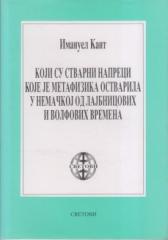
Koji su stvarni napreci koje je metafizika ostvarila u Nemačkoj od Lajbnicovih i Volfovih vremena

Koji su stvarni napreci koje je metafizika ostvarila u Nemačkoj od Lajbnicovih i Volfovih vremena

Kant
Immanuel Kant

Kant re-examines the development of German metaphysics from Leibniz and Wolff to critical philosophy, exploring the limits of human reason and the possibility of reliable metaphysical knowledge.

Svetovi, 2004.
Serbisch. Kyrillisch Schrift. Taschenbuch.
9,99 €
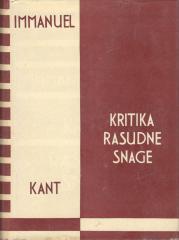
Kritika rasudne snage

Kritika rasudne snage

Kant
Immanuel Kant

Kant untersucht das Wesen des Schönen, des Erhabenen und der Zweckmäßigkeit in der Natur und verknüpft dabei die Ästhetik mit der menschlichen Erkenntnis und der Moral. Ein Grundwerk der modernen Ästhetik und Kunstphilosophie.

Kultura, 1957.
Kroatisch. Latein Schrift. Fester Einband mit Schutzumschlag.
23,46 €
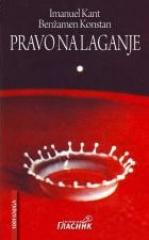
Pravo na laganje

Pravo na laganje

Kant, Constant
Immanuel Kant, Benjamin Constant

Kant argumentierte, dass es kein Recht zu lügen gebe, da die Wahrheit zu sagen eine absolute Pflicht sei, wohingegen Constant die Möglichkeit einer Ausnahme von dieser Pflicht befürwortete und argumentierte, dass man zum Wohle der Allgemeinheit lügen soll

Službeni glasnik, 2008.
Serbisch. Latein Schrift. Taschenbuch.
8,36 €