Hans Werner Richter
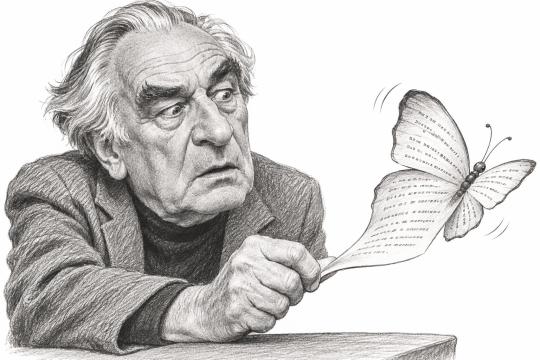
A writer reads an unpublished manuscript aloud, then listens to what others heard in it. Hans Werner Richter (1908–1993), a German novelist and editor, built the meetings of Group 47 around that simple rule. Literature was debated while the writing was still in progress, in a room full of peers who might take issue with a single sentence.
Richter was born into a fishing family in Bansin on the Baltic island of Usedom and trained as a bookseller. During the Second World War he served in the German army and was taken prisoner by the Americans. In captivity he worked on newspapers for German prisoners of war. After returning home, he and Alfred Andersch edited the Munich journal of politics and culture Der Ruf.
Group 47 grew out of the journal’s circle of contributors in 1947. Richter invited writers and led the discussions. Over two decades the meetings became an important forum for postwar West German literature. Ingeborg Bachmann and Günter Grass were among the writers who read there. Richter later recalled some of the people he knew through the group in his collection of literary portraits Im Etablissement der Schmetterlinge (1986).
His early novels bear the mark of his work as a journalist. The language stays close to everyday speech, and the war is seen at close quarters. Die Geschlagenen (1949) takes place on the Italian front towards the end of the war and in an American prisoner-of-war camp. Sie fielen aus Gottes Hand (1951) intertwines the lives of perpetrators and victims from different countries. In the autobiographical novel Spuren im Sand (1953), he revisits his childhood and youth on Usedom.
The Zagreb publisher Zora brought out his novel Ne ubij in Croatian in 1957. Croatian readers can also find Izgubljeno dostojanstvo (1963). In Richter’s fiction, the experience of war and defeat comes through in everyday speech and in what people do under pressure.
Titles in our offer

Ne ubij
Hans Werner Richter's anti-war novel explores the Second World War, from military victories and retreat to defeat and chaos, examining violence, obedience, personal responsibility and the moral consequences of war.