Władysław Stanisław Reymont
Władysław Stanisław Reymont (born Stanisław Władysław Rejment; Kobiele Wielkie near Radomsk, 7 May 1867 – Warsaw, 5 December 1925) was a Polish novelist, short story writer and Nobel laureate, one of the greatest representatives of Polish realism and naturalism and a member of the Young Poland (Młoda Polska) literary movement.
He was born into a poor family of a village organist. He did not finish his education because he was attracted to adventure and art. He worked as an apprentice tailor, railwayman, actor in traveling theater troupes, and was briefly a novice in a monastery. These diverse and difficult experiences deeply marked his work – especially his knowledge of rural life, the proletariat and theatrical bohemia.
He achieved his first literary successes at the end of the 19th century. The novel Ziemia obiecana (The Promised Land, 1899) is a powerful naturalistic picture of the rapid industrial development of Łódź, corruption, greed and the conflicts of capital, nationality and class. The work was later adapted for the screen by Andrzej Wajda (1974).
His life's work is the epic tetralogy Chłopi (Peasants, 1904–1909), a monumental depiction of the life of the Polish village through the four seasons (Autumn, Winter, Spring, Summer). The novel is written in a rich peasant dialect, with exceptional epic breadth, naturalistic rawness and a deep poetic feeling for the rhythm of nature and the cyclical nature of life. Peasants is a masterpiece of 20th-century European realism and it was for this “great national epic” that Reymont received the Nobel Prize for Literature in 1924.
Other notable works include the novels Komediantka (The Comedian, 1896) and Fermenty (1897) based on theatrical experiences, the historical trilogy Rok 1794 (1913–1918) about the Polish uprising, and the novel Bunt (Pobun, 1924), an allegorical story of animal revolution (similar to Orwell's Animal Farm).
Reymont was a prolific writer who traveled throughout Europe (especially France), and in 1900 he was seriously injured in a train accident, which brought him financial compensation and allowed him to work peacefully on Peasants. In 1902 he married Aurelia Szabłowska. He died in 1925, just a year after receiving the Nobel Prize, at the age of 58.
Titles in our offer
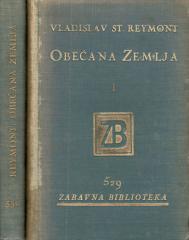
Obećana zemlja 1-2
The novel The Promised Land, published in 1899, is one of the most significant works by Polish Nobel Prize winner Władysław Reymont. Set in the industrial city of Łódź at the end of the 19th century, the novel depicts rapid industrialization and its conse
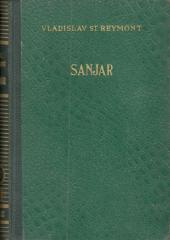
Sanjar
The novel The Dreamer by Polish Nobel laureate Władysław Stanisław Reymont, published in Croatian in 1944, is an introspective and philosophically tinged work that differs from his more famous realistic novels such as The Peasant.
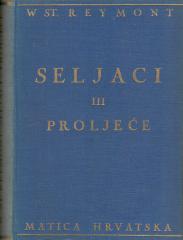
Seljaci III: Proljeće
The third part of the epic tetralogy The Peasants. Spring brings the awakening of nature, but also new conflicts in the village of Lipce: the culmination of a love triangle, family drama and social tensions. The continuation of Nobel's epic of Polish peas
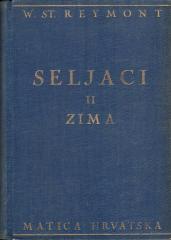
Seljaci II: Zima
The second part of the epic tetralogy Peasants. The novel depicts the difficult winter life in the village of Lipce, deepens the conflicts within Boryna's family, the passionate relationship between Antko and Jagna, and the growing tensions in the village
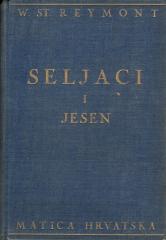
Seljaci I: Jesen
The first part of an epic tetralogy about the life of a Polish rural community in the village of Lipce. The novel depicts the rhythm of rural work, everyday life, intrigues, conflicts over land and power, and the marriage of the old, wealthy peasant Macie
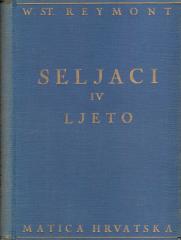
Seljaci IV: Ljeto
Peasants IV: Summer is the final and most powerful part of the epic tetralogy Peasants. The culmination of the conflict in the village of Lipce during the hot summer and harvest, the drama surrounding Jagna, the death of Maciej Boryna and the final closin