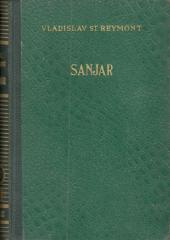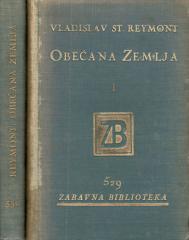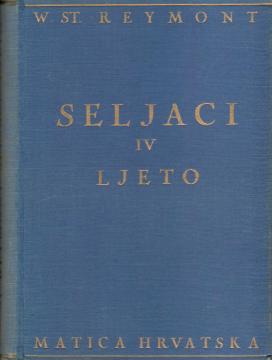
Seljaci IV: Ljeto
Peasants IV: Summer is the final and most powerful part of the epic tetralogy Peasants. The culmination of the conflict in the village of Lipce during the hot summer and harvest, the drama surrounding Jagna, the death of Maciej Boryna and the final closin
The fourth and final volume of the monumental tetralogy Peasants (Chłopi), for which Reymont received the Nobel Prize for Literature in 1924. The translation from Polish, as with the previous three parts, was made by Julije Benešić.
Summer brings the culmination and resolution of all the conflicts begun in Autumn. The action takes place in the village of Lipce during the hottest part of the year – the harvest time, when the village is at the peak of work, tension and vitality. The heat is almost tangible, and with it human passions, hatred and revenge grow.
The central character of this part becomes Jagna, who, due to her beauty, passion and openness, becomes the sacrificial lamb of the entire village. The peasants, led by Hanka and other women, cruelly punish her and expel her from the community. At the same time, Maciej Boryna, the patriarch of the village, slowly dies, and his son Antek finally takes over the role of the boss. This closes the large family and social circle.
In Summer, Reymont reaches the pinnacle of his epic storytelling. Harvest is depicted as an almost ritualistic, Dionysian act – a combination of work, sweat, lust, violence and fertility. Nature is in full bloom, but also brutal; village life continues, regardless of the fate of individuals. The author shows extraordinary power in depicting collective psychology – the village acts as a single organism that cleanses and renews itself.
The style is rich, powerful and naturalistically raw, with exceptionally vivid descriptions of harvest, storms, night scenes and human emotions. Benešić's translation masterfully conveys the rhythm, dialect and poetics of the original, making the Croatian edition exceptionally valuable.
Summer rounds out the tetralogy Peasants as one of the most impressive works of 20th-century European literature. Reymont did not just describe the Polish village – he created a universal image of man, nature, community, birth and death, love and hate, greed and nobility.
This edition of Matica Hrvatska with Julije Benešić as translator and author of the foreword is considered the best Croatian translation of Reymont's masterpiece. An indispensable work for all lovers of epic prose, realism and classics of world literature.
A copy is available as part of the book set "Seljaci I-IV"
Browse the set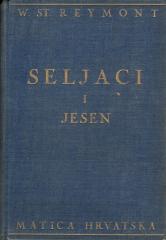
1. Seljaci I: Jesen
The first part of an epic tetralogy about the life of a Polish rural community in the village of Lipce. The novel depicts the rhythm of rural work, everyday life, intrigues, conflicts over land and power, and the marriage of the old, wealthy peasant Macie
- Cracked back
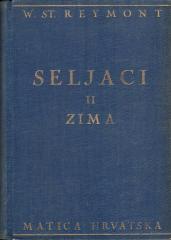
2. Seljaci II: Zima
The second part of the epic tetralogy Peasants. The novel depicts the difficult winter life in the village of Lipce, deepens the conflicts within Boryna's family, the passionate relationship between Antko and Jagna, and the growing tensions in the village
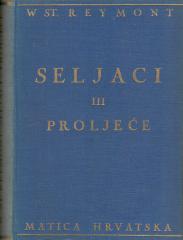
3. Seljaci III: Proljeće
The third part of the epic tetralogy The Peasants. Spring brings the awakening of nature, but also new conflicts in the village of Lipce: the culmination of a love triangle, family drama and social tensions. The continuation of Nobel's epic of Polish peas
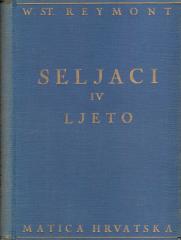
4. Seljaci IV: Ljeto
Peasants IV: Summer is the final and most powerful part of the epic tetralogy Peasants. The culmination of the conflict in the village of Lipce during the hot summer and harvest, the drama surrounding Jagna, the death of Maciej Boryna and the final closin
One copy is available