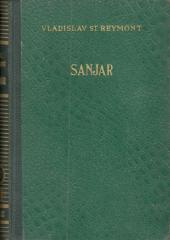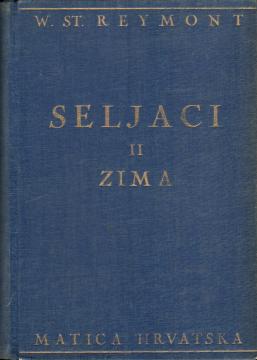
Seljaci II: Zima
The second part of the epic tetralogy Peasants. The novel depicts the difficult winter life in the village of Lipce, deepens the conflicts within Boryna's family, the passionate relationship between Antko and Jagna, and the growing tensions in the village
The second volume of the monumental tetralogy Peasants (Chłopi), for which Reymont won the Nobel Prize for Literature in 1924. The translation from Polish, as with the first part, was made by Julije Benešić, who gave the entire tetralogy an extraordinary literary quality.
The action of Winter takes place in the village of Lipce during the most difficult season of the year. Snow, frost and a long winter night close the village in and intensify all conflicts. The main conflict remains within the Maciej Boryna family: old Boryna, married to the young Jagna, is increasingly losing authority, while his son Antek openly rebels against his father. The love passion between Antek and Jagna grows into a strong, destructive relationship that shakes the entire village.
Reymont masterfully depicts the winter rhythm of village life: long evenings with kerosene lamps, church holidays (Christmas and New Year), weddings, quarrels in the tavern, gossip and growing social tensions. Winter here is not just a season – it is a symbol of hardship, isolation, smoldering passions and the slow disintegration of old patriarchal relationships.
In this part, the author delves even deeper into the psychology of the characters. Jagna shows herself to be a complex female character – beautiful, lustful, but also a victim of her own instincts and social rules. Antek is torn between love, hatred for her father and responsibility for her family. The entire village functions as one large organism in which every action has consequences.
The style is rich, picturesque and naturalistically raw, with extraordinary descriptions of nature that merge with human destinies. Reymont shows an exceptional understanding of the collective psychology of the village and the cyclical nature of life related to the seasons.
Winter is a more dramatic and tense part than Autumn – conflicts intensify, and the village slowly boils towards the culmination that will follow in spring and summer. The tetralogy Peasants is considered one of the most powerful epic depictions of the peasant world in world literature.
The 1928 edition of Matica hrvatska with Benešić's translation and foreword is today a highly regarded antiquarian edition. An indispensable work for lovers of classical realism, epic prose, and profound socio-psychological novels.
A copy is available as part of the book set "Seljaci I-IV"
Browse the set
1. Seljaci I: Jesen
The first part of an epic tetralogy about the life of a Polish rural community in the village of Lipce. The novel depicts the rhythm of rural work, everyday life, intrigues, conflicts over land and power, and the marriage of the old, wealthy peasant Macie
- Cracked back
2. Seljaci II: Zima
The second part of the epic tetralogy Peasants. The novel depicts the difficult winter life in the village of Lipce, deepens the conflicts within Boryna's family, the passionate relationship between Antko and Jagna, and the growing tensions in the village
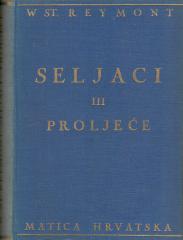
3. Seljaci III: Proljeće
The third part of the epic tetralogy The Peasants. Spring brings the awakening of nature, but also new conflicts in the village of Lipce: the culmination of a love triangle, family drama and social tensions. The continuation of Nobel's epic of Polish peas
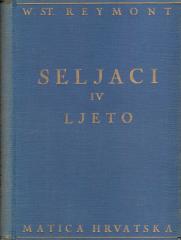
4. Seljaci IV: Ljeto
Peasants IV: Summer is the final and most powerful part of the epic tetralogy Peasants. The culmination of the conflict in the village of Lipce during the hot summer and harvest, the drama surrounding Jagna, the death of Maciej Boryna and the final closin