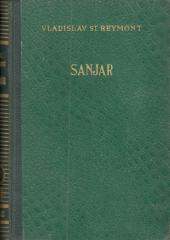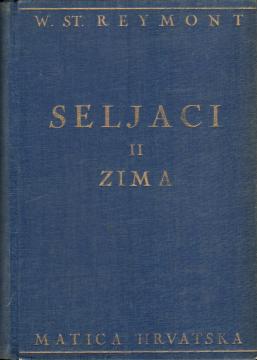
Seljaci II: Zima
The second part of the epic tetralogy Peasants. The novel depicts the difficult winter life in the village of Lipce, deepens the conflicts within Boryna's family, the passionate relationship between Antko and Jagna, and the growing tensions in the village
The second volume of the monumental tetralogy Peasants (Chłopi), for which Reymont won the Nobel Prize for Literature in 1924. The translation from Polish, as with the first part, was made by Julije Benešić, who gave the entire tetralogy an extraordinary literary quality.
The action of Winter takes place in the village of Lipce during the most difficult season of the year. Snow, frost and a long winter night close the village in and intensify all conflicts. The main conflict remains within the Maciej Boryna family: old Boryna, married to the young Jagna, is increasingly losing authority, while his son Antek openly rebels against his father. The love passion between Antek and Jagna grows into a strong, destructive relationship that shakes the entire village.
Reymont masterfully depicts the winter rhythm of village life: long evenings with kerosene lamps, church holidays (Christmas and New Year), weddings, quarrels in the tavern, gossip and growing social tensions. Winter here is not just a season – it is a symbol of hardship, isolation, smoldering passions and the slow disintegration of old patriarchal relationships.
In this part, the author delves even deeper into the psychology of the characters. Jagna shows herself to be a complex female character – beautiful, lustful, but also a victim of her own instincts and social rules. Antek is torn between love, hatred for her father and responsibility for her family. The entire village functions as one large organism in which every action has consequences.
The style is rich, picturesque and naturalistically raw, with extraordinary descriptions of nature that merge with human destinies. Reymont shows an exceptional understanding of the collective psychology of the village and the cyclical nature of life related to the seasons.
Winter is a more dramatic and tense part than Autumn – conflicts intensify, and the village slowly boils towards the culmination that will follow in spring and summer. The tetralogy Peasants is considered one of the most powerful epic depictions of the peasant world in world literature.
The 1928 edition of Matica hrvatska with Benešić's translation and foreword is today a highly regarded antiquarian edition. An indispensable work for lovers of classical realism, epic prose, and profound socio-psychological novels.
Eine Kopie ist als Teil des Buchsets "Seljaci I-IV" verfügbar.
Durchsuchen Sie die Büchersammlung
1. Seljaci I: Jesen
Prvi deo epske tetralogije o životu poljske seoske zajednice u selu Lipce. Roman prikazuje ritam seoskih radova, svakodnevicu, intrige, sukobe oko zemlje i vlasti, i ženidbu starog, bogatog seljaka Maćeja Borine sa mladom i lepom Jagnom.
- Napukla leđa
2. Seljaci II: Zima
Drugi deo epske tetralogije Seljaci. Roman prikazuje težak zimski život u selu Lipce, produbljuje sukobe unutar Borinine porodice, strastveni odnos između Antka i Jagne i rastuće tenzije u selu. Ep o seljačkom životu dobitnik Nobelove nagrade.
3. Seljaci III: Proljeće
Der dritte Teil der epischen Tetralogie „Die Bauern“. Der Frühling bringt das Erwachen der Natur, aber auch neue Konflikte im Dorf Lipce: den Höhepunkt einer Dreiecksbeziehung, Familiendrama und soziale Spannungen. Die Fortsetzung von Nobels Epos über das
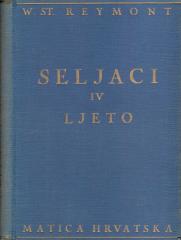
4. Seljaci IV: Ljeto
„Die Bauern IV: Sommer“ ist der letzte und eindrucksvollste Teil der epischen Tetralogie „Die Bauern“. Er gipfelt im Konflikt im Dorf Lipce während des heißen Sommers und der Erntezeit, im Drama um Jagna, im Tod von Maciej Boryna und im endgültigen Abschl