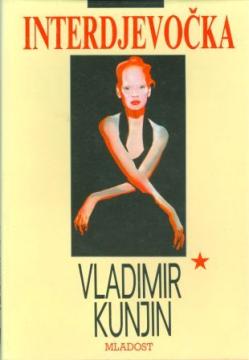
Interdjevočka

Interdjevočka

Vladimir Kunjin

The novel follows the life of a Moscow nurse who works at night as an "intergirl" - a prostitute for foreigners. The novel depicts moral dilemmas, economic despair and the collapse of values ​​in late Soviet society.

Interdjevočka by Vladimir Kunjin is a novel that powerfully portrays the late Soviet everyday life through the fate of Tatiana Zaitseva, a nurse from Moscow who, due to her low salary and hopeless life, starts working as an "interdjevočka" - a prostitute specializing in foreigners. Kunjin realistically portrays an environment in which Soviet bureaucracy, black market, social inequality and moral hypocrisy intertwine in the grayness of everyday life. Tatjana lives a double life: modest and hard-working during the day, part of half a world at night that functions outside the official morality of the state.

The novel explores in detail her inner struggle between the desire for a better life and the awareness of the price she pays. Through relationships with customers, friends from the same milieu, colleagues and family, Kunjin exposes a society where resourcefulness and survival are more important than ideological slogans. Tatiana's decision to marry a foreigner and leave the USSR is shown as an attempt to escape from her own reality, but also as an act of deep insecurity - because freedom promises a lot, but does not solve everything.

The work is direct, realistic and socially critical, without romanticizing or moralizing. Through Tatjana, Kunjin depicts an entire epoch – a collapsing system, people who manage as they know how, and an individual torn between desires and limitations. Intergirl remains a powerful depiction of the disintegration of values ​​and intimacy of a woman trying to survive in a world that offers her very few choices.

Translation
Irena Lukšić
Editor
Zvonimir Majdak
Graphics design
Fadil Vejzović
Dimensions
20 x 14.2 cm
Pages
151
Publisher
Mladost, Zagreb, 1990.
 
Distribution: 4,000 copies
 
Latin alphabet. Hardcover with dust jacket.
Language: Croatian.
ISBN
8-60-500446-0

One copy is available

Condition:Used, excellent condition
 

Are you interested in another book? You can search the offer using our search engine or browse books by category.

You may also be interested in these titles

Ruska šuma

Ruska šuma

Leonid Leonov

The novel follows Boris Kostomarov, an engineer in Soviet Russia, who, through conflicts with bureaucracy, moral questioning, and the fates of people in remote forests, reveals the complexity of Soviet society and the price of personal conscience.

Prosveta, 1960.
Serbian. Cyrillic alphabet. Hardcover with dust jacket.
6.365.09
Uzorana ledina

Uzorana ledina

Mihail Šolohov

The novel is set in a Cossack community on the Don River during collectivization in the Soviet Union. The work, divided into two parts, follows the dramatic changes in the village of Gremyachi Log as the Bolsheviks introduce collective farms, which provok

Sveučilišna naklada Liber (SNL), 1980.
Croatian. Latin alphabet. Hardcover with dust jacket.
8.32
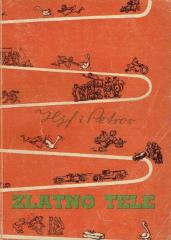
Zlatno telešce

Zlatno telešce

Ilja Iljf, Evgenij Petrov

The Golden Calf (1931) follows the ingenious con artist Ostap Bender, who in Soviet Russia during the first five-year plan seeks a secret millionaire in order to get rich, encountering the absurdity of bureaucracy, the new Soviet man, and his own downfall

Naklada Binoza, 1934.
Croatian. Latin alphabet. Hardcover with dust jacket.
9.74
Moskva – Petuški

Moskva – Petuški

Venjedikt Jerofejev

Venedikt Yerofeyev's postmodern prose poem is today considered a classic of new Russian literature. It is compared to Gogol and Kharms for its poetics of absurdity, satire, and metaphysical depth.

LOM, 217.
Serbian. Cyrillic alphabet. Paperback.
11.24
Zlatno tele

Zlatno tele

Ilja Iljf, Jevgenij Petrov

The Golden Calf (1931) is a brilliant satirical picaresque adventure, a sequel to the legendary 12 Chairs, where the great schemer Ostap Bender returns in full glory – charming, cynical, irredeemably cunning and always one step ahead of everyone else.

Kultura, 1946.
Croatian. Latin alphabet. Hardcover with dust jacket.
7.56
Uspomene iz mog života

Uspomene iz mog života

Maksim Gorki

The autobiographical prose of Maxim Gorky, who in a series of vivid and poignant images depicts his difficult childhood, youth and wanderings through Russia, encounters with ordinary people, poverty, violence and his first steps in literature.

Naklada Binoza, 1934.
Croatian. Latin alphabet. Hardcover with dust jacket.
7.46