Simbolizam i tumačenje
Rare book

Simbolizam i tumačenje

Tzvetan Todorov

In the book, Todorov examines the relationship between the production of discourse (rhetoric) and its interpretation (hermeneutics), focusing on verbal symbolism – the phenomenon of indirect meaning that builds on direct, literal meaning.

Symbolism only arises at the moment of interpretation: a text or discourse becomes symbolic when the reader/interpreter discovers a secondary, hidden meaning behind the primary one. A symbol is not an inherent property of the text, but the result of an interpretative act. Todorov emphasizes that symbolization and interpretation are inseparable activities – there is no symbol without interpretation, nor meaningful interpretation without recognizing the symbolic level.

The author analyzes historical approaches to symbols through two major models:

  • Classical (ancient and classicist) – allegorical interpretation: a sign has a hidden meaning that needs to be discovered (e.g. ancient allegory, patristic exegesis of the Bible). The goal is to find a stable, unique message behind the “veil”.

  • Romantic – a symbol understood as inexhaustible, ambiguous, organic; interpretation is infinite, subjective and never final (e.g. German Romanticism, Coleridge, Schelling).

Todorov shows how in the 18th–19th centuries In the 19th century, a crisis occurred between these two approaches: classical clarity and unambiguity were opposed to romantic vagueness and plurality of meanings. This tension determines modern semiotics and hermeneutics.

The book does not offer a universal definition of a symbol, but presents various historical and theoretical approaches (rhetoric, semiotics, philosophy of language, theology). It concludes that semiotics is actually symbolism, and every interpretation is always partial and conditioned by context, epoch and subject. Meaning is not fixed in either the sign or the text – it is born in the encounter between the text and the interpreter. Symbolism is therefore a dynamic process, not a static property of language.

Original title
Symbolisme et interprétation
Translation
Jovica Aćin
Editor
Jovan Zivlak
Graphics design
Zoran Janjetov
Dimensions
17 x 12 cm
Pages
181
Publisher
Svetovi, Novi Sad, 1986.
 
Latin alphabet. Paperback with dust jacket.
Language: Serbian.

One copy is available

Condition:Used, excellent condition
 

Are you interested in another book? You can search the offer using our search engine or browse books by category.

You may also be interested in these titles

Titostalgija

Titostalgija

Mitja Velikonja

The author explores why Tito remains a popular symbol of stability, social security and independence, despite critical views of his regime. The book maps the cultural, political and everyday manifestations of "Titostalgia".

Biblioteka XX vek, 2010.
Serbian. Latin alphabet. Paperback.
7.36
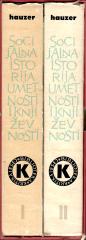
Socijalna istorija umetnosti i književnosti I-II

Socijalna istorija umetnosti i književnosti I-II

Arnold Hauser

First published in 1951 Arnold Hausers commanding work presents an account of the development and meaning of art from its origins in the Stone Age through to the Film Age.

Kultura, 1966.
Serbian. Latin alphabet. Hardcover with dust jacket.
The book consists of two volumes
14.26 - 24.52
Muzički leksikon (priručnik za ljubitelje muzike)

Muzički leksikon (priručnik za ljubitelje muzike)

Casper Höweler

It is difficult, and it seems even impossible, to find a sufficiently comprehensive title to present a work as complex as this combination of a musical lexicon, a guide through symphonic, oratorio, chamber and opera music.

Matica srpska, 1967.
Serbian. Latin alphabet. Hardcover with dust jacket.
9.32 - 10.68
Život i običaji naroda Kine

Život i običaji naroda Kine

Petar Vlahović

The author used various research methods, such as field work, interviews with local residents, study of written sources and other relevant materials.

Naučna knjiga, 1973.
Serbian. Latin alphabet. Paperback.
6.98
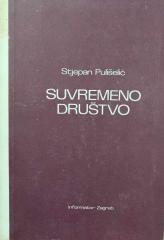
Suvremeno društvo

Suvremeno društvo

Stjepan Pulišević

Pulisevic analyzes social structures, cultural dynamics and the impact of technological progress on modern life.

Informator, 1979.
Croatian. Latin alphabet. Hardcover.
7.24
Divlja Evropa

Divlja Evropa

Božidar Jezernik

At the center of Jezernik's scientific work is ethnological and anthropological research of the Balkans and Eastern Europe.

Biblioteka XX vek, 2007.
Serbian. Latin alphabet. Paperback.
9.98