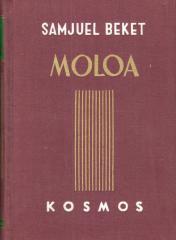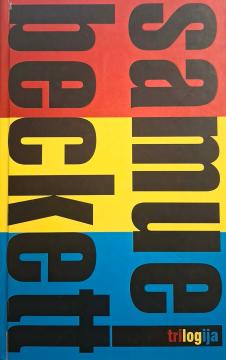
Triologija: Molloy, Malone umire, Neimenjivi
He has marked the contemporary era like few others, and his heroes or "heroes" with their emotional and moral dilemmas, weighed down by existential anxiety and news of cataclysms and possible apocalypses, are closer to us than ever.
Beckett's trilogy consists of three novels: Molloy (1951), Malone Dies (1951), and The Unnameable (1953). These are key works of 20th-century modernist and existentialist literature, in which Beckett gradually dismantles classical plot, character identity, and narrative structure itself.
- Molloy
The novel is divided into two parts.
The first part is narrated by Molloy, a vagrant trying to find his mother. His journey is chaotic, full of repetitions, digressions, and memory lapses. He physically deteriorates, moving with increasing difficulty (first walking, then cycling, finally crawling), and the narration becomes increasingly unreliable. The second part follows Moran, a detective who is assigned to find Molloy. As the plot progresses, Moran becomes more and more like Molloy – physically and mentally deteriorating, his world falling apart, and the line between pursuer and pursued becomes blurred.
- Malone Dies
The main character, Malone, lies motionless in a room, waiting to die. He passes the time by telling stories and making lists of his remaining belongings. He tries to create characters (e.g. Sapo/Macmann), but his narration constantly gets out of hand. The line between Malone and his characters becomes blurred. The novel gradually disintegrates into fragmentary thoughts and interruptions, until an abrupt and incomplete ending.
- The Unnameable
The most radical part of the trilogy. There is no classic plot. A voice without a body, without an identity and without a clear position in space speaks in a long, almost uninterrupted monologue. The narrator questions his own existence, doubts all the identities attributed to him (Molloy, Malone, etc.) and tries to reach silence – but cannot stop talking. He ends with the famous line: “I must go on. I cannot go on. I will go on.”
One copy is available