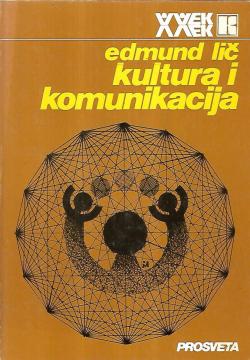
Kultura i komunikacija: Logika povezivanja simbola
In Culture and Communication, Edmund Leach explores social relations through language, rituals, and symbols. He connects anthropology with communication theory, showing culture as a system of meaning that shapes human behavior.
Culture and Communication by the British anthropologist Edmund Leach is one of the key works of structural anthropology of the second half of the 20th century. In this work, Leach builds on the ideas of Claude Lévi-Strauss, but develops them in his own way, emphasizing that culture is not a simple set of customs, but a dynamic system of signs and messages. Human society, according to Leach, can only be understood if we analyze the patterns of communication – both verbal and non-verbal – through which meanings and power are transmitted.
Leach connects anthropology with linguistic theory, suggesting that cultural expressions function like language: they have a grammatical structure and relationships between elements that create meaning. At the heart of the book is the idea that symbols cannot be viewed outside the context of communication – rituals, kinship relationships or social hierarchies are always forms of expression, through which individuals and communities define their world.
Through a series of examples from ethnographic research, Leach shows how power, authority and social change are manifested precisely in the way people understand each other – or do not understand each other. Culture and Communication thus lays the foundation for the contemporary understanding of culture as a network of meaning and poses the question: are we the creators of language, or does language create us?
One copy is available