Blizu kuće

Blizu kuće

Erskine Caldwell

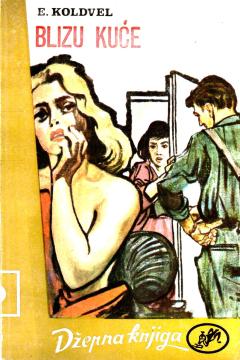
"Close to Home" (1962) by Erskine Caldwell is a sharp, realistic novel about racism, hypocrisy, and social injustice in the American South during the era of segregation.

The protagonist, Native Hunnicutt, a poor white man from a run-down shack in the small town of Palmyra, marries the wealthy widow Maebelle largely for her excellent cooking, financial security, and comfort. However, his true passion remains his long-standing secret affair with Josene, Maebelle's black maid (an octoronk – one-eighth black blood), which symbolizes the fragile boundaries of racial segregation.

Caldwell realistically depicts everyday life in a town where racial segregation is the legal and social norm, but where whites break the rules at night in secret relationships. Native is not an ideological racist, but rather a passive participant in the system through social conventions and fear. When Maebelle discovers the affair, her jealousy and anger set in motion a chain of events: accusations, police brutality, a unfair trial, and collective punishment of the black community, highlighting the systemic bias of the judiciary and white supremacy.

The novel is typical of Caldwell's style – raw, without restraint, focused on poverty, sexuality, violence and social problems of the South (similar to "Tobacco Road" and "God's Little Acre"). Without pathos or sentimentality, it criticizes the hypocrisy of segregation and the inhumanity of racism in the 1950s/1960s. The work is controversial for its overt depiction of racial mixing and violence, but it remains an important testament to American racial tension.

Original title
Close to Home
Translation
Ljerka Radović
Editor
Risto Trifković
Graphics design
Mirko Stojnić
Dimensions
16.5 x 11 cm
Pages
179
Publisher
Svjetlost, Sarajevo, 1964.
 
Latin alphabet. Paperback.
Language: Croatian.

One copy is available

Condition:Unused
 

Are you interested in another book? You can search the offer using our search engine or browse books by category.

You may also be interested in these titles

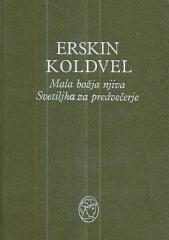
Mala božja njiva, Svetiljka za predvečerje

Mala božja njiva, Svetiljka za predvečerje

Erskine Caldwell
Minerva, 1981.
Serbian. Latin alphabet. Hardcover.
4.99
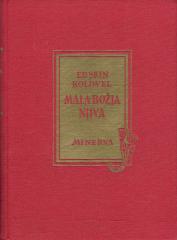
Mala božja njiva

Mala božja njiva

Erskine Caldwell

Osiromašena porodica Volden u Džordžiji ruši sopstvenu zemlju u potrazi za zakopanim zlatom. Opsednuti seksom, pohlepom i iluzijama, oni tonu u haos želje i nasilja tokom Velike depresije.

Minerva, 1958.
Serbian. Latin alphabet. Hardcover.
2.00 - 5.32
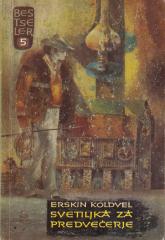
Svetiljka za predvečerje

Svetiljka za predvečerje

Erskine Caldwell
Grafički zavod - Titograd, 1964.
Croatian. Latin alphabet. Paperback.
5.98
Zlatni lanac

Zlatni lanac

Upton Sinclair

Apton Sinkler oštro kritikuje odnos između umetnosti i kapitala kroz istoriju. On pokazuje kako su novac i moć oduvek uticali na književnost, slikarstvo i muziku i kako su veliki umetnici često bili zarobljenici „zlatnog lanca“.

Biblioteka savremenih pisaca, 1932.
Croatian. Latin alphabet. Hardcover with dust jacket.
6.24
Lov na dvoličnu puru

Lov na dvoličnu puru

Mark Twain

„Lov na dvoliku gusku“ je humoristična priča Marka Tvena u kojoj autor kroz komične situacije prikazuje ljudsku pohlepu, lakovernost i sklonost ka preterivanju.

Naprijed, 1964.
Croatian. Latin alphabet. Paperback.
4.58
Bebit

Bebit

Sinclair Lewis

Babbitt (1922) is a satirical novel by Sinclair Lewis that depicts the life of George F. Babbitt, a typical American citizen – a successful real estate agent living in the conformity, materialism, and false morality of provincial American society.

NIP Pobjeda, 1961.
Croatian. Latin alphabet. Hardcover with dust jacket.
7.24