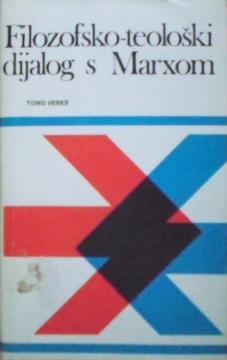
Filozofsko-teološki dijalog s Marxom
Toma Vereš's Philosophical-Theological Dialogue with Marx is a serious Catholic encounter with Marx's thought: it analyzes alienation, practice, religion, and anthropology, seeking bridges between Marxism and Christianity without polemics.
The book by Toma Vereš, a Croatian Dominican, philosopher and theologian, represents one of the most thorough attempts at dialogue between Christian thought and Marxism in socialist Yugoslavia in the 1970s. The author neither rejects nor uncritically accepts Marx, but rather enters into a deep philosophical and theological discussion with his work – from the early humanist Marx (Paris Manuscripts, The Alienation of Labor and Man) to the later materialist approach (Theses on Feuerbach, Capital, Historical Materialism).
Vereš particularly illuminates Marx’s criticism of religion as “the opium of the people”, but shows how it stems from alienation and can be read in parallel with the Christian understanding of sin and the fall. He highlights similarities in the emphasis on practice and the change of the world: Marx’s thesis that philosophers only interpret the world, and that it needs to be changed, resonates with Christian eschatological hope and the call to action in history. It discusses anthropology – man as a being of labor, freedom and transcendence – and attempts to overcome Marx’s pure materialism towards an openness to the transcendental.
The book is neither apologetic nor pro-Marxist; it is a meeting of two great narratives of human liberation – Marxist and Christian – at the level of a precise analysis of the original texts, influenced by Thomas Aquinas. Created in the context of official Marxism and the Church’s need for dialogue, it remains relevant for understanding the possible points of contact between Marxism, liberation theology and contemporary ethical questions of justice and exploitation.
One copy is available
- The cover is missing