Émile Zola

Émile Zola

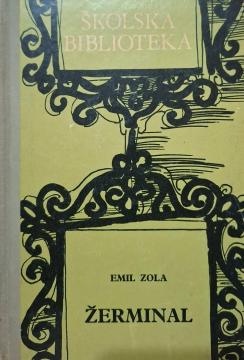
Žerminal

In his best work, Germinal, Émile Zola realistically, in minute detail, described the inhuman living and working conditions of miners in northern France in the 1860s.

Germinal is a novel published in 1885, one of the most important in Zola's "Rougon-Macquart" cycle. The main character, Étienne Lantier, a young worker who lost his job due to his impetuous nature, comes to the mining settlement of Montsou and gets a job at the Voreux mine. There, he witnesses the brutal working conditions, injustice, and misery that plagues the mining families. Étienne becomes increasingly politically aware, embraces socialist ideas, and organizes a strike in an effort to get workers better conditions and wages. The strike, initially full of hope, soon develops into a struggle for bare survival. The government and mining employers brutally suppress the rebellion, and the strikers and their families suffer hunger and death. The mine becomes a symbol of the relentless force that grinds the workers down. Despite the defeat, the novel ends with symbolic hope: Germinal – a month in the French revolutionary calendar that marks the awakening of nature – suggests that, like spring, workers' resistance will once again flourish. In "Germinal," Zola masterfully combines a naturalistic depiction of misery with strong emotion and social engagement. The work remains one of the most powerful depictions of social injustice in literature.

Translation
Dušan Matić
Editor
Muris Idrizović
Graphics design
Mladen Kolobarić
Dimensions
17 x 12 cm
Pages
541
Publisher
Svjetlost, Sarajevo, 1967.
 
Latin alphabet. Hardcover.
Language: Serbian.

One copy is available

Condition:Used, very good condition
 

Are you interested in another book? You can search the offer using our search engine or browse books by category.

You may also be interested in these titles

Eugenija Grande

Eugenija Grande

Honore de Balzac

"Eugénie Grandet" (1833), part of Balzac's Human Comedy, is a realistic novel that explores greed, family relationships, and the sacrifices of love in provincial French society.

Svjetlost, 1970.
Croatian. Latin alphabet. Hardcover.
4.99 - 5.00
Bartolomejska noć: knjiga 1-2

Bartolomejska noć: knjiga 1-2

Alexandre Dumas

This book focuses on one of the bloodiest events in French history – St. Bartholomew's Day in 1572, when thousands of French Protestants were massacred in Paris and across the country.

Epoha, 1966.
Croatian. Latin alphabet. Hardcover with dust jacket.
The book consists of two volumes
9.36
Kiše

Kiše

Saint-John Perse
Bagdala, 1962.
Serbian. Cyrillic alphabet. Paperback.
4.28
Pod plaštom noći

Pod plaštom noći

Claude Aveline

This collection is perfect for fans of psychological mysteries like Agatha Christie or Simenon, but with a French poetic touch.

Kosmos, 1958.
Serbian. Latin alphabet. Paperback.
2.12 - 2.14
Nježni rat

Nježni rat

Thierry Breton, Denis Beneich
Mladost, 1987.
Croatian. Latin alphabet. Paperback.
4.82
Filozofske priče

Filozofske priče

Honore de Balzac

Philosophical Tales is part of Balzac's "Human Comedy", and includes four stories – The Shangri-La, The Elixir of Long Life, The Unknown Masterpiece and Melmoth the Penitent – that explore philosophical, moral and metaphysical themes through complex chara

Kultura, 1949.
Croatian. Latin alphabet. Hardcover.
4.22 - 4.25