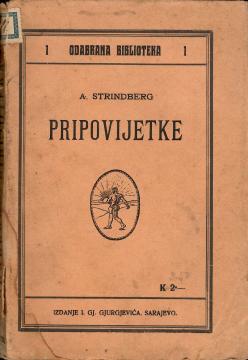
Pripovijetke
The collection brings together Strindberg's realistic and symbolist tales of love, marriage, guilt, and redemption. The characters struggle with societal pressures and their own flaws, searching for meaning and freedom.
Strindberg's Short Stories open the door to a world in which everyday life and myth constantly touch. The collection brings together texts from realistic sketches of marriage and society to lyrical-symbolic fairy tales of transformation.
In the titles from the first block – That's How It Had to Be, The Compensation, Mr. Bengt's Wife, The Doll – we follow the tiny cracks in relationships: jealousy that turns into a habit, guilt that demands a price and annulment, and the figures of spouses who question the roles that their environment has assigned to them. Strindberg cuts with short, sharp sentences, records the smells of modest rooms, the quiet murmur of a petty-bourgeois reputation and the unpleasant truth that love and pride rarely fit in the same apartment.
Then follow the stories that breathe with the wider lungs of imagination. The Phoenix, Natural Obstacle and Love and Bread transform intimate crises into small moral parables: the old is burned, the new arises from the ashes; desire collides with “reason” and an empty wallet; feeling and need conduct eternal commerce.
The cycle From the “Book of Love” brings variations on the theme of closeness – from the first captivating magnet to the cold morning when bread is counted. There are also philosophical miniatures Karma and Magnetic Mountain, where decisions return like an echo, and attractions and repulsions between characters draw invisible maps of fate. In the final texts Paradise and Undine Strindberg reaches for mythical images of water and light: purification, the call of a different life and the possibility of a person being “rewritten” from one world to another.
The charm of this collection lies in the tension: between documentary-precise scenes and poetic codes, between the cold observer and the vulnerable confessional voice. Strindberg is at once a chronicler of centuries-old everyday life and a dramatist of inner turmoil. His characters are contradictory, alive, sometimes cruel, but never lifeless; that is why each story reads like a small novel.
One copy is available
- Damaged covers
- Traces of patina