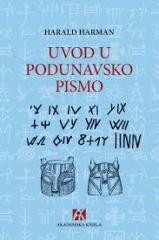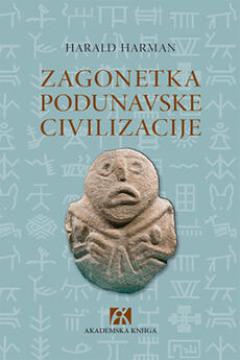
Zagonetka podunavske civilizacije
Harald Haarmann's book presents the discovery of Europe's oldest highly developed culture (c. 5500–3500 BC), known as the Danube or Old European Civilization, with an emphasis on its writing, art and influence.
The Riddle of the Danube Civilization is a popular science book by the German linguist and culturologist Harald Haarmann. In it, the author presents a synthetic presentation of the so-called Danube Civilization (Donauzivilisation), which he considers to be the oldest highly developed culture in Europe, older than the Minoan and Sumerian.
Haarmann describes a rich culture that flourished in the area from the Balkans to the Carpathians (the Vinča, Karanovo, Cucuteni-Tripoli, Lengyel cultures, etc.). The civilization had large settlements (larger than modern Mesopotamian ones), developed pottery with kilns, copper and gold metallurgy, sophisticated art, trade and – which is especially important to Haarmann – the oldest writing system in Europe (the so-called donauschrift or Old European script), which predates the Sumerian cuneiform script.
The book traces the origins of this civilization along the Black Sea, its economic, social and spiritual characteristics and its influence on later cultures, including Greek antiquity. Haarmann emphasizes that this civilization was more peaceful, egalitarian and matrifocal compared to later Indo-European warrior cultures.
The work is written in an accessible style, richly illustrated and intended for a wider audience. Although some of Haarmann's theses (especially on the level of development and writing) are controversial and not generally accepted in mainstream archaeology, the book is very influential in popular science and archaeomythology. On the Croatian/Serbian market, it has become quite popular among lovers of alternative history and ancient European cultures.
One copy is available