Djela 4: Naši ljudi i krajevi
The fourth volume of the Works of A. G. Matoš contains the collection Our People and Regions (1910), portraits and landscapes of Croatian regions, people and cultural figures, impressive travelogues and essays with autobiographical and polemical tones.
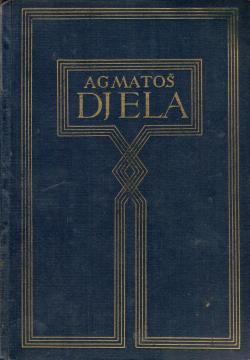
The book Works 4: Our People and Regions (1937, edited by Antun Barac) is the fourth volume in the 17-volume critical edition Works of A. G. Matoš (1935–1940). Like the previous volumes, the literary legacy was collected by Matoš's brother Milan Matoš, and Antun Barac edited the texts with philological precision — comparing variants, orthographic standardization, and brief "Notes" on the origin and previous publications.
Our People and Regions: Portraits and Landscapes (originally 1910, published by J. Sokol) is Matoš's book of travelogues, feuilletons, essays, and impressions written after his final return to Zagreb in 1908. The collection brings impressions of Croatian regions (Srijem, Zagreb, Zagorje, Dalmatia, etc.), portraits of contemporaries, writers, public figures, and broader cultural and social images. Here, Matoš combines the liveliness of travelogues, sharp observations, lyrical landscapes, and a polemical tone — characteristic of his journalistic work.
The book reflects Matoš’s cosmopolitanism and patriotism: he writes about “our” people and regions with love, but also critically, with irony and disappointment in Croatian reality (provincialism, political circumstances, petty bourgeoisie). The style is impressive and subjective — landscapes become symbols of a state of mind, and portraits reveal deeper psychological and social layers. The work connects Matoš’s journalistic experience with literary mastery, making him one of the best Croatian travel writers and essayists.
In the context of Barč's collected edition, the fourth volume builds on the previous ones: after the early short stories (Works 1), essays (Works 2) and mature prose (Works 3 – Tired Stories), here Matoš as an engaged intellectual and chronicler of his time comes to the fore. The collection is important for understanding his relationship to his homeland after emigration — a mixture of nostalgia, love and criticism.
Barč's 1937 edition made this opus available in a standardized form and preserved it for future generations. Today, Our People and Regions is valued as a key document of Croatian modernity: a blend of literature and journalism, landscape lyricism and social satire. The work shows Matoš as a writer who opened Croatian literature to European horizons, while at the same time being deeply rooted in domestic soil. It is indispensable for studying Matoš's worldview, style and role in shaping modern Croatian culture.
One copy is available
- Slight damage to the cover