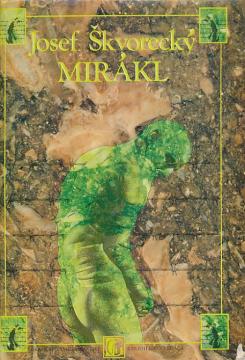
Mirakl: Politički krimić

Mirakl: Politički krimić

Josef Škvorecký

A political detective novel about an alleged miracle in a Czechoslovak village. Through the exploration of the puzzle, Škvorecký provides a sharp satire on communism, the Prague Spring and the Soviet invasion.

Miracle: A Political Crime Story (1972) is one of the most prominent works of the Czech émigré writer Josef Škvorecký. The plot is based on a real historical event, the so-called "Miracle in Číhošće" from 1949, when a crucifix moved during mass in a village church, which the communist regime used to brutally crack down on the Catholic Church and murder a local priest.

The central character and narrator is once again the author's recognizable alter ego Danny Smiřický. Twenty years later, during the political thaw and the Prague Spring of 1968, Danny tries to shed light on who was really behind the mysterious event — whether it was a true religious secret, a secret provocation by the StB secret police, or skillful manipulation. The investigation leads him through a tangled web of lies, ideological deceptions, political intrigues, and personal twists.

In the novel, Škvorecký masterfully combines the genre of detective story, grotesque, erotica and political satire. The work uncompromisingly exposes the absurd mechanisms of totalitarian government, the delusions of intellectuals and the naivety of reform communists, and ends with a shocking account of the crushing of the Prague Spring by the Soviet occupation.

The Croatian edition of this cult novel brings exceptional intellectual and literary critical value thanks to accompanying texts by two great Central Europeans. In the foreword, Milan Kundera emphasizes Škvorecki as a master of irony and grotesque who managed to portray history without pathos and illusions, while Predrag Matvejević in the afterword places Mirakl in the broader context of dissident literature, Central European mentality and reflections on the roles of intellectuals in revolutionary times.

Original title
Mirákl
Translation
Dagmar Ruljančić
Graphics design
Mirko Ilić, Luka Mjeda
Dimensions
24 x 17 cm
Pages
517
Publisher
Grafički zavod Hrvatske (GZH), Zagreb, 1987.
 
Latin alphabet. Hardcover with dust jacket.
Language: Croatian.

One copy is available

Condition:Used, excellent condition
 

Are you interested in another book? You can search the offer using our search engine or browse books by category.

You may also be interested in these titles

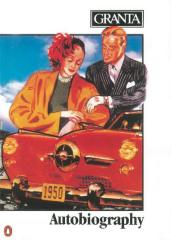
Granta 14: Autobiography

Granta 14: Autobiography

Norman Lewis, Raymond Carver, Beryl Bainbridge, Michael Ignatieff, Doris Lessing, Vladimir Rybako...

Granta 14: Autobiography brings autobiographical essays and literary writings by world-renowned authors who explore identity, family, memories, history, and art through personal experiences.

Penguin Books Ltd, 1985.
English. Latin alphabet. Paperback.
14.32
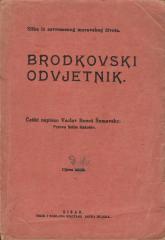
Brodkovski odvjetnik: Slika iz savremenog moravskog života

Brodkovski odvjetnik: Slika iz savremenog moravskog života

Vaclav Beneš Šumavsky

"The Brodkov Lawyer" by Václav Beneš Šumavsky is a realistic novel about a lawyer, social conditions, morality and everyday life in Moravia. Popular Czech fiction in Croatian translation.

Tisak i naklada knjižare Janka Dujaka, 1894.
Croatian. Latin alphabet. Paperback.
9.38
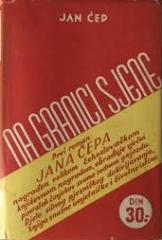
Na granici sjene

Na granici sjene

Jan Čep

"On the Edge of Shadow", the only novel by Jan Čep, follows Prokop Randa on his return to his hometown, where the search for meaning develops into a deep spiritual and existential drama.

Hrvatska književna naklada neovisnih književnika, 1938.
Croatian. Latin alphabet. Hardcover with dust jacket.
4.58
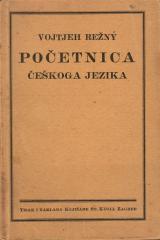
Početnica češkoga jezika

Početnica češkoga jezika

Vojtjeh Režný

"Introduction to the Czech Language" by Vojtjeh Režny (1915) is a beginner's Czech language textbook intended for Croatian speakers. It contains spelling, grammar, pronunciation and reading instructions, with an emphasis on the Czech tradition from Jan Hu

St. Kugli, 1915.
Croatian. Latin alphabet. Hardcover.
6.32
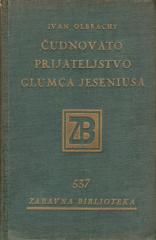
Čudnovato prijateljstvo glumca Jeseniusa

Čudnovato prijateljstvo glumca Jeseniusa

Ivan Olbracht

Ivan Olbracht's story follows the actor Jesenius, who prepares for the role of Jan Jesenius and, by identifying with him, gradually becomes psychologically destabilized and loses his sense of his own identity.

Naklada zaklade tiskare Narodnih novina, 1933.
Croatian. Latin alphabet. Hardcover.
6.46