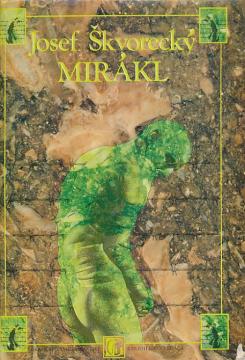
Mirakl: Politički krimić
Ein politischer Kriminalroman über ein angebliches Wunder in einem tschechoslowakischen Dorf. Durch die Aufklärung des Rätsels liefert Škvorecký eine scharfe Satire auf den Kommunismus, den Prager Frühling und die sowjetische Invasion.
Miracle: A Political Crime Story (1972) is one of the most prominent works of the Czech émigré writer Josef Škvorecký. The plot is based on a real historical event, the so-called "Miracle in Číhošće" from 1949, when a crucifix moved during mass in a village church, which the communist regime used to brutally crack down on the Catholic Church and murder a local priest.
The central character and narrator is once again the author's recognizable alter ego Danny Smiřický. Twenty years later, during the political thaw and the Prague Spring of 1968, Danny tries to shed light on who was really behind the mysterious event — whether it was a true religious secret, a secret provocation by the StB secret police, or skillful manipulation. The investigation leads him through a tangled web of lies, ideological deceptions, political intrigues, and personal twists.
In the novel, Škvorecký masterfully combines the genre of detective story, grotesque, erotica and political satire. The work uncompromisingly exposes the absurd mechanisms of totalitarian government, the delusions of intellectuals and the naivety of reform communists, and ends with a shocking account of the crushing of the Prague Spring by the Soviet occupation.
The Croatian edition of this cult novel brings exceptional intellectual and literary critical value thanks to accompanying texts by two great Central Europeans. In the foreword, Milan Kundera emphasizes Škvorecki as a master of irony and grotesque who managed to portray history without pathos and illusions, while Predrag Matvejević in the afterword places Mirakl in the broader context of dissident literature, Central European mentality and reflections on the roles of intellectuals in revolutionary times.
Jedan primerak je u ponudi