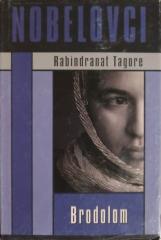
Brodolom
Shipwreck (1906) is a novel about fate and chance. After a shipwreck, Ramesh and Kamala begin a life together, believing they are married. The novel explores the conflict between duty, love, identity, and social norms in colonial Bengal.
Rabindranath Tagore (1861–1941), an Indian Nobel laureate in literature (1913), published the novel Noukadubi (Shipwreck) in 1906. The story is set in Bengal at the beginning of the 20th century. The protagonist, Ramesh, a young lawyer and intellectual, is in love with the educated Hemnalini. However, at his father's request, he agrees to an arranged marriage with an unknown girl, Susheila. On the way back from the wedding, their ship is shipwrecked in a storm. Ramesh survives with the girl he believes to be his wife, but she is actually Kamala – the young bride of another man (Nalinaksha) who also survived.
The novel unfolds as a subtle drama of identity, duty and love. Ramesh, faced with a moral dilemma, does not immediately reveal the truth to Kamala, but takes her into his home. A deep but platonic relationship full of tenderness and respect develops. In the meantime, Hemnalini and Nalinaksha go through their own sufferings and searches.
Tagore masterfully intertwines personal destinies with social themes: traditional marriages, the position of women in Indian society, the clash of modern ideas and conservative customs, fate and coincidence. The novel is psychologically deep, lyrical and humane, without cheap melodrama. It is especially strong in the depiction of female characters – Kamala and Hemnalini – who carry inner strength and dignity.
Shipwreck is one of Tagore's most famous prose works, often adapted for film. In the Croatian edition by Ante Velzek, it became part of the popular Catholic-bourgeois reading audience in the 1940s. The work still fascinates today with the universality of the theme: how much we are determined by coincidences and what price we pay for respecting duty versus our own happiness.
One copy is available
- The cover is missing