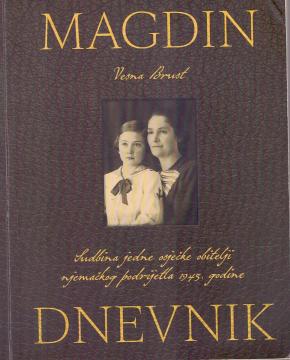
Magdin dnevnik
Das Schicksal einer Familie deutscher Herkunft aus Osijek im Jahr 1945. Als authentisches Dokument der Nachkriegszeit zeugt Magdas Tagebuch von den Opfern gewöhnlicher, einfacher Menschen, die, obwohl unschuldig, im veränderten Regime zu Schuldigen werden
Der Roman „Magdas Tagebuch“ von Vesna Brust, einer kroatischen Autorin deutscher Herkunft, erzählt die Geschichte einer deutschen Familie in Osijek nach dem Zweiten Weltkrieg anhand der Tagebucheinträge von Magdalena (Magda), einem jungen Mädchen aus einer angesehenen donauschwabischen Familie. Die Geschichte beginnt 1945, mit Kriegsende. Osijek, eine multiethnische Stadt voller deutscher Traditionen – von Jugendstilpalästen bis hin zu tief verwurzelten Familientraditionen –, sieht sich nun der kommunistischen Rache ausgesetzt.
Magda, ein intelligentes und sensibles Mädchen, schildert die Schrecken des Alltags: die Verhaftung ihres Vaters wegen angeblicher Kollaboration, die Überlebensangst ihrer Mutter, die Enteignung ihres Hauses und ihres Besitzes, Hunger und die Angst vor den Konzentrationslagern. Die Familie, die jahrhundertelang zur Kultur der Stadt beigetragen hatte (als Kaufleute, Handwerker und Künstler), wird nun zum „Volksfeind“ erklärt. Magda beschreibt die Zwangsräumungen von Nachbarn nach Österreich oder in die DDR, religiöse Konflikte, das Schweigen über Traumata und den Verlust der Identität – die deutsche Sprache verschwindet still und leise, und Familiengeschichten geraten in Vergessenheit.
Durch Magdas Augen sehen wir die generationsübergreifende Weitergabe des Schmerzes: die Kriegserinnerungen ihres Großvaters, die Resignation ihrer Mutter und ihren eigenen Kampf um den Erhalt ihrer Würde. Der Roman verwebt intime Gefühle mit dem historischen Kontext – von Bleiburg bis zur Nachkriegsrepression – und prangert kollektive Schuld an, während er gleichzeitig die Widerstandskraft feiert. Brust, inspiriert von ihrer Familiengeschichte, schreibt poetisch, aber in einer unverblümten Sprache, die Deutsch und Kroatisch miteinander verschmelzen lässt und so den Verlust der Wurzeln symbolisiert.
Am Ende bleibt Magda, inzwischen erwachsen, in Osijek zurück, die Last des Schweigens tragend, aber auch die Hoffnung auf Versöhnung. Das Tagebuch ist eine Hommage an die vergessenen Donauschwaben und erinnert uns daran, dass die Stürme des Krieges die Menschlichkeit nicht auslöschen.
One copy is available