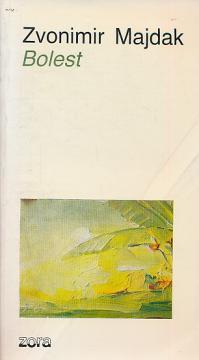
Bolest

Bolest

Zvonimir Majdak

The novel belongs to Majdak's cycle of existentialist prose, which allegorically addresses the problems of life in an urban environment.

The novel explores themes of alienation, existential crisis, and inner emptiness. The main character faces a profound sense of meaninglessness in everyday life, resulting in anxiety, psychological burden, and a condition symbolized by "illness" – a metaphor for identity crisis and spiritual emptiness. Through an introspective and allegorical approach, Majdak depicts the struggle of an individual with inner turmoil and the social pressures of an urban environment. The novel is notable for its style and thematic depth, initiating Majdak's series of existentialist works, and is considered one of the key works of Croatian literature of that period.

Editor
Nenad Popović
Graphics design
Sanja Iveković
Dimensions
19 x 11 cm
Pages
333
Publisher
Zora, Zagreb, 1988.
 
Distribution: 2,000 copies
 
Latin alphabet. Paperback.
Language: Croatian.

One copy is available

Condition:Used, excellent condition
 

Are you interested in another book? You can search the offer using our search engine or browse books by category.

You may also be interested in these titles

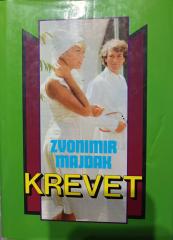
Krevet

Krevet

Zvonimir Majdak
Mladinska knjiga, 1990.
Croatian. Latin alphabet. Hardcover with dust jacket.
2.99
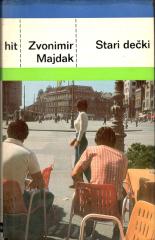
Stari dečki

Stari dečki

Zvonimir Majdak

Roman Stari dečki Zvonimira Majdaka, objavljen 1975. godine, nastavak je kultnog romana Kužiš, stari moj i deo je njegove „proze u farmerkama“, koju karakteriše opušteni, zagrebački žargon pomešan sa polukajkavskim stilom.

Znanje, 1975.
Croatian. Latin alphabet. Hardcover with dust jacket.
5.42
Pazi, tako da ostanem nevina

Pazi, tako da ostanem nevina

Zvonimir Majdak
Naprijed, 1986.
Croatian. Latin alphabet. Hardcover with dust jacket.
9.99
Melem za dušu 2

Melem za dušu 2

Jack Canfield, Mark Victor Hansen
Mozaik knjiga, 1998.
Croatian. Latin alphabet. Hardcover.
7.26
Mrtve duše

Mrtve duše

Nikolaj Vasiljevič Gogolj

„Die toten Seelen“ (1842) ist eine brillante Satire, die den moralischen und sozialen Verfall des zaristischen Russlands durch Tschitschikows Betrug mit toten Leibeigenen aufdeckt, mit Gogols virtuoser Mischung aus Humor, Ironie und Lyrik.

Veselin Masleša, 1969.
Croatian. Latin alphabet. Hardcover with dust jacket.
6.98
Ni pet ni šest nego 11 štosnih ogleda

Ni pet ni šest nego 11 štosnih ogleda

Miljenko Muršić
Biakova d. o. o., 2022.
Croatian. Latin alphabet. Hardcover.
15.99