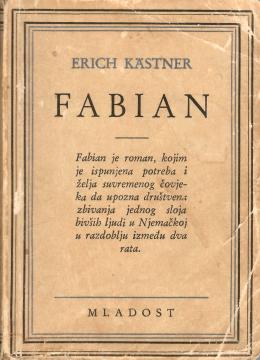
Fabian: Pripovijest o moralistu
Rare book

Fabian: Pripovijest o moralistu

Erich Kästner

Jakob Fabian, an unemployed Germanist and moralist, wanders through Berlin in the 1930s, observing the moral, political and social decay and the rise of Nazism. He falls in love with Cornelia, but tragedies and nonsense lead him to a tragic end. Criticism

The novel by Erich Kästner (1899–1974), author of children's classics such as Emil and the Detective and The Flying Class, Fabian is his most serious, darkest and most political work for adults. Published in 1931 in Stuttgart, the novel was immediately banned and burned by the Nazis in 1933 (Kästner was present at the burning of his own books). The first edition was censored (explicit erotic parts were removed); the full, uncensored version (Der Gang vor die Hunde) was only published posthumously in 2013, and earlier in some editions.

The protagonist Jakob Fabian (32 years old, doctor of German) works in an advertising agency, but loses his job in the midst of the economic crisis. A passive observer ("just watching"), he drifts through Berlin's nightlife: cabarets, brothels, alcohol, superficial relationships, political extremes (communists vs. Nazis). Fabian is an intellectual-moralist who believes in reason, decency and humanism, but he sees society falling apart - people are sold, values ​​disappear, politics becomes a circus. He falls in love with Cornelia Battenberg, an ambitious actress and intellectual, who gives him hope, but the relationship falls apart under the pressure of time. The key tragic event: the suicide of a friend of Labude (due to a false accusation of plagiarism), which Fabian perceives as a personal defeat. In the end, in a drunken state, Fabian drowns in the river – a senseless, helpless ending that symbolizes the fate of the liberal intelligentsia in the face of totalitarianism.

The novel is a mixture of satire, melancholy and sharp social criticism: it makes fun of the Berlin decadence of the "golden twenties" that turns into a nightmare, pornography as a metaphor for society, media manipulation, mass unemployment. Kästner uses short, crisp sentences, a documentary style, newspaper quotes and poems.

Original title
Fabian. Die Geschichte eines Moralisten
Translation
Stanislav Šimić
Dimensions
15 x 10 cm
Pages
265
Publisher
Mladost, Zagreb, 1952.
 
Latin alphabet. Paperback.
Language: Croatian.

One copy is available

Condition:Used, excellent condition
Damages or inconvenience notice:
  • Slight damage to the cover
 

Are you interested in another book? You can search the offer using our search engine or browse books by category.

You may also be interested in these titles

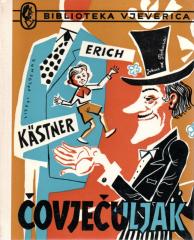
Čovječuljak

Čovječuljak

Erich Kästner
Mladost, 1976.
Croatian. Latin alphabet. Hardcover.
3.98 - 4.98
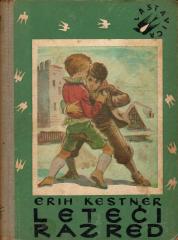
Leteći razred

Leteći razred

Erich Kästner

Many people throw away their childhood like old hat. They forget it like a phone number that no longer works. First such people were children, then they became adults, but what are they really? Only those who grow up and remain human!

Narodna prosvjeta, 1959.
Croatian. Latin alphabet. Hardcover.
6.78
Ludwig van Beethoven

Ludwig van Beethoven

La Mara

Ludwig van Beethoven is a popular, accessible biography of Beethoven by German author Maria Lipsius, known under the pseudonym La Mara. Extremely rare, like all Edition Slave editions.

Edition Slave, 1921.
Croatian. Latin alphabet. Paperback.
18.26
Ludwig van Beethoven: njegov život i stvaranje

Ludwig van Beethoven: njegov život i stvaranje

Joseph August Lux

A popular biography of the great composer, a biographical work that traces Beethoven's turbulent life, creativity, personal dramas and genius. Wartime edition of the Jos. Čaklović Publishing House with 16 illustrations.

Nakladni zavod Josip Čaklović, 1944.
Croatian. Latin alphabet. Hardcover.
11.36
Putevi nesreće I: Fontana Mediči

Putevi nesreće I: Fontana Mediči

Joseph Kessel

Paris on the eve and during World War I. Young Richard Dalleau, full of ambition and a hunger for life, embarks on a journey of success, love and moral trials that will lead him into a vortex of misfortune.

Minerva, 1959.
Serbian. Latin alphabet. Hardcover.
6.54
Gedichte: Aus dem Alltag

Gedichte: Aus dem Alltag

Otto Müller-Neudorf

Gedichte: Aus dem Alltag (Zagreb, 1942) is a collection of lyrical poems in German by Otto Müller-Neudorf inspired by everyday life. Published in the NDH, it reflects intimate observations, nature, and everyday moments.

Vlastita naklada, 1942.
German. Latin alphabet. Hardcover.
13.42