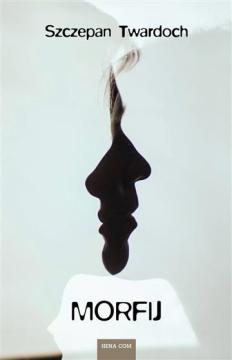
Morfij
Konstanty Willemann, a morphine addict and cynic torn between Polish and German identity, tries to survive September 1939 and the war, running away from history, his mother, women and himself.
Morphine (2012) is one of the most successful novels by the Polish (Silesian) writer Szczepan Twardoch. The plot follows the life of Konstanty Willemann, a thirty-year-old Warsaw native, a failed artist, bon vivant, womanizer, bad husband and father, and a morphine addict. He is the son of a Polonized Silesian woman, Katarzyna, and a German aristocrat, which makes him eternally torn between two nationalities and cultures.
The novel begins on the eve of and during the September campaign of 1939, when Germany invades Poland. Konstanty, a reserve officer, reluctantly participates in the war, and after the defeat is drawn into a secret resistance organization. But he does not believe in ideals – God, honor, homeland – for him, all of this is secondary to the next dose of morphine and the opportunity to continue his decadent, debauched life as a pre-war dandy. History, of course, does not let him go; the war pushes him into moral dilemmas, violence and chaos of occupied Warsaw.
Twardoch masterfully depicts the unstable identity of the protagonist: each woman in his life (nymphomaniac mother, wife, mistress) shapes him in a different way, just as history forces him to choose between Pole and German. The novel is radical, linguistically rich, manic and dark – a mix of historical fiction, psychological thriller and elements of magical realism. The protagonist is a classic anti-hero: repulsive, cynical, weak, but at the same time irresistible and very human.
The book demystifies the Polish national myth of heroism, showing the weakness, opportunism and chaos of war through the prism of one weak individual. At the same time, it is a universal story about the search for identity, addiction (not only chemical, but also to women, social roles and history) and the impossibility of escape from great events.
Morphine brought Twardoch great success (Paszport Polityki Award, and other nominations), was translated into several languages and is considered one of the most powerful Polish novels about World War II. In the Croatian translation by Emil Nuić it retained its raw power and became notable in the region. An ideal read for lovers of intense, unpleasant and stylistically virtuosic prose.
No copies available
The last copy is reserved.