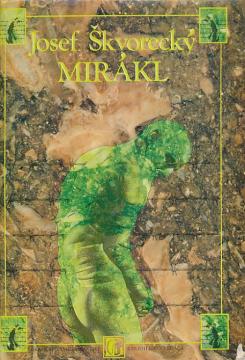
Mirakl: Politički krimić

Mirakl: Politički krimić

Josef Škvorecký

A political detective novel about an alleged miracle in a Czechoslovak village. Through the exploration of the puzzle, Škvorecký provides a sharp satire on communism, the Prague Spring and the Soviet invasion.

Miracle: A Political Crime Story (1972) is one of the most prominent works of the Czech émigré writer Josef Škvorecký. The plot is based on a real historical event, the so-called "Miracle in Číhošće" from 1949, when a crucifix moved during mass in a village church, which the communist regime used to brutally crack down on the Catholic Church and murder a local priest.

The central character and narrator is once again the author's recognizable alter ego Danny Smiřický. Twenty years later, during the political thaw and the Prague Spring of 1968, Danny tries to shed light on who was really behind the mysterious event — whether it was a true religious secret, a secret provocation by the StB secret police, or skillful manipulation. The investigation leads him through a tangled web of lies, ideological deceptions, political intrigues, and personal twists.

In the novel, Škvorecký masterfully combines the genre of detective story, grotesque, erotica and political satire. The work uncompromisingly exposes the absurd mechanisms of totalitarian government, the delusions of intellectuals and the naivety of reform communists, and ends with a shocking account of the crushing of the Prague Spring by the Soviet occupation.

The Croatian edition of this cult novel brings exceptional intellectual and literary critical value thanks to accompanying texts by two great Central Europeans. In the foreword, Milan Kundera emphasizes Škvorecki as a master of irony and grotesque who managed to portray history without pathos and illusions, while Predrag Matvejević in the afterword places Mirakl in the broader context of dissident literature, Central European mentality and reflections on the roles of intellectuals in revolutionary times.

Original title
Mirákl
Translation
Dagmar Ruljančić
Graphics design
Mirko Ilić, Luka Mjeda
Dimensions
24 x 17 cm
Pages
517
Publisher
Grafički zavod Hrvatske (GZH), Zagreb, 1987.
 
Latin alphabet. Hardcover with dust jacket.
Language: Croatian.

One copy is available

Condition:Used, excellent condition
 

Are you interested in another book? You can search the offer using our search engine or browse books by category.

You may also be interested in these titles

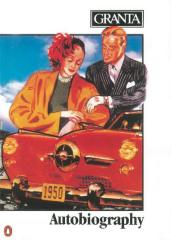
Granta 14: Autobiography

Granta 14: Autobiography

Norman Lewis, Raymond Carver, Beryl Bainbridge, Michael Ignatieff, Doris Lessing, Vladimir Rybako...

Granta 14: Autobiography brings autobiographical essays and literary writings by world-renowned authors who explore identity, family, memories, history, and art through personal experiences.

Penguin Books Ltd, 1985.
English. Latin alphabet. Paperback.
14.32
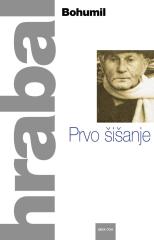
Prvo šišanje

Prvo šišanje

Bohumil Hrabal

The First Haircut, a short story written in 1970 and published in 1976, is the first in a series of prose pieces by Bohumil Hrabal describing Nymburk, the town where he spent his childhood. In 1981, The First Haircut was adapted for the screen by Jiry Men

24 sata, 2007.
Croatian. Latin alphabet. Paperback.
7.24
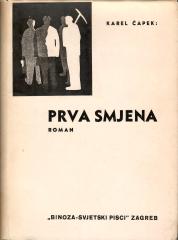
Prva smjena

Prva smjena

Karel Čapek

The First Shift is a novel by Čapek, first published in 1937. A novel about human courage tells about a handful of people who, in extreme conditions, must mobilize all their courage, friendship and solidarity.

Naklada Binoza, 1938.
Croatian. Latin alphabet. Hardcover with dust jacket.
34.28
Pasoglavci ili Boj čeških graničara za seljačko pravo

Pasoglavci ili Boj čeških graničara za seljačko pravo

Alois Jirásek

A rare Croatian edition of the historical novel by Alois Jirásek. The work brings to life the dramatic struggle of the Czech border guards – the Chods (Pasoglavaci) – who guarded the southern borders of the Czech Republic for centuries, defending rights a

Naklada slavenske knjižare St. i M. Radić, 1929.
Croatian. Latin alphabet. Hardcover.
12.42
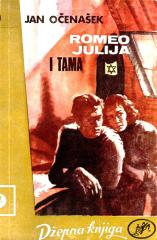
Romeo, Julija i tama

Romeo, Julija i tama

Jan Otčenášek

In occupied Prague in 1942, the student Pavel hides the wounded Jewish woman Hana. In danger and fear, a strong love is born between them. The Gestapo discovers them, Pavel dies tortured under investigation, and Hana survives the Holocaust carrying the me

Svjetlost, 1965.
Serbian. Latin alphabet. Paperback.
3.26
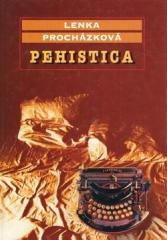
Pehistica

Pehistica

Lenka Prochazkova

Prague. A time of denial of intellectual rights and freedoms. The time of "flight to the west" or hiding in the homeland.

Mozaik knjiga, 2002.
Croatian. Latin alphabet. Hardcover.
3.58