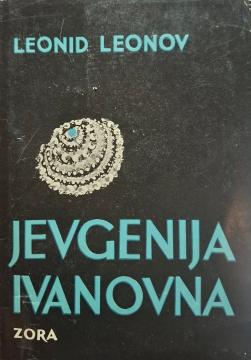
Jevgenija Ivanovna
Leonid Leonov's short novel Yevgenia Ivanovna explores the themes of alienation, insurmountable homesickness, loss of identity and unhappiness in the post-war world through the tragic fate of a Russian emigrant in Europe.
Yevgeniya Ivanovna (1964) is a psychologically and lyrically colored short novel by the prominent Russian and Soviet writer Leonid Leonov. The plot of the work follows the life path of the title heroine, a young Russian noblewoman who, after the October Revolution and the Civil War, leaves her homeland and lives as an emigrant in Western Europe (Constantinople, Paris, London), marrying the English archaeologist Straaton. Although she seemingly achieves a stable and peaceful life in her new surroundings, Yevgeniya is torn apart by unbearable nostalgia and a sense of uprootedness. An encounter with her former love from her homeland further ignites her repressed emotions and accelerates the tragic denouement. Leonov, with exceptional psychological subtlety, depicts the inner breakdown of a person who is physically saved, but spiritually forever tied to the country she had to leave. The metaphor of the novel is deeply imbued with the theme of the tragedy of Russian emigration in the 20th century. Her relationship to her new environment and nostalgia for her homeland are not presented through political slogans, but through an intimate, quiet human drama. Yevgeniya Ivanovna is one of Leonov's most subtle works, captivating with its stylistic elegance, bitter insights into foreignness, and a moving depiction of incurable longing.
One copy is available
- Library stamp