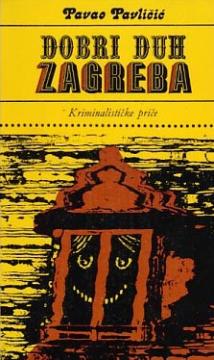
Dobri duh Zagreba
The cult crime novel follows retired statistician Valentin Kovač, who discovers a mathematical pattern in crimes committed in Zagreb, but his obsession leads to an unexpected resolution.
"The Good Spirit of Zagreb" (Dobri duh Zagreba) is one of Pavao Pavličić’s most famous books; published in 1976, it established the genre of the contemporary Croatian crime novel. The protagonist is Valentin Kovač, a modest and reclusive retired statistician whose quiet life changes drastically when, out of curiosity, he begins keeping his own records and analyzing newspaper crime reports. Through methodical data processing, Valentin makes a shocking discovery: crimes in Zagreb do not occur randomly but follow a strict, mathematically precise pattern and rhythm. Driven by a desire to prevent future misdeeds and become an invisible protector—the "good spirit" of his city—Valentin begins to predict the exact time and location of future crimes. However, as he delves deeper into the mysterious mechanisms of the city's underworld, the boundary between observer and participant begins to dangerously blur, and his obsession leads to dramatic consequences. In this work, Pavličić masterfully blends a suspenseful crime plot with the distinctive setting and atmosphere of Zagreb. Through the character of Valentin Kovač, the author explores themes of loneliness, the human need for order and meaning in a chaotic world, and the fine line separating noble intentions from moral transgression.
One copy is available