Dobra žena

Dobra žena

Luis Bromfild

The novel portrays the destructive power of false morality through the character of a mother whose apparent goodness stifles her son's freedom. Bromfield masterfully analyzes the hypocrisy of early 20th-century American society.

The novel A Good Woman (originally published in 1927)—here discussed in its 1973 edition—by the American Nobel and Pulitzer Prize-winning author Louis Bromfield, is a powerful social critique and a psychological study of hypocrisy. Set in a small industrial town in the American Midwest during the early 20th century, the story follows the life of Emma Downes, a woman regarded by her community as an exemplary, pious, and self-sacrificing mother. However, beneath this facade of the "good woman" lies a domineering, manipulative, and selfish nature. Her obsessive need to control her surroundings and mold her son Philip’s life according to her own rigid moral and religious standards stifles his individuality and destroys his dreams. Philip’s struggle to break free from his mother’s suffocating influence and forge his own path through art and love forms the novel's central conflict. In this work, Bromfield reveals how Puritan morality, false modesty, and social conventions can become destructive weapons. A Good Woman is the final installment of Bromfield’s renowned tetralogy on American life and remains one of his most mature and influential literary achievements.

Original title
A good woman
Translation
Dušan Divjak
Graphics design
Janko Krajšek
Dimensions
20 x 12.5 cm
Pages
354
Publisher
Rad, Beograd, 1973.
 
Latin alphabet. Hardcover.
Language: Serbian.

One copy is available

Condition:Used, excellent condition
Damages or inconvenience notice:
  • Traces of patina
 

Are you interested in another book? You can search the offer using our search engine or browse books by category.

You may also be interested in these titles

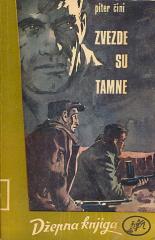
Zvezde su tamne

Zvezde su tamne

Peter Cheyney

"The stars are dark" is a spy thriller by the British writer Peter Cheyney, known for fast, tense stories and hard-boiled characters.

Svjetlost, 1965.
Serbian. Latin alphabet. Paperback.
2.96
Proces

Proces

Franz Kafka

Kafka wrote The Process between 1914 and 1915, published posthumously in 1925. The novel is unfinished but with an added final chapter by Max Brod. Edition with a foreword by B. Živojinović and an afterword by Walter Killi.

BIGZ, 1990.
Serbian. Latin alphabet. Paperback.
4.26
Shannonov put

Shannonov put

Archibald Joseph Cronin

Cronin's moving story of redemption. Robert Shannon, a fanatical doctor-researcher, sacrifices love and life for science, but in the end loses everything – his girlfriend, recognition, health – only to realize through suffering: medicine without humanity

Otokar Keršovani, 1966.
Croatian. Latin alphabet. Hardcover with dust jacket.
6.24
Djetinjstvo

Djetinjstvo

Lav Nikolajevič Tolstoj

Childhood (1852) is the first book of an autobiographical trilogy (with Adolescence and Youth), where Tolstoy explores the world of childhood through the eyes of a ten-year-old boy, Nikolinka Irtenjev – innocence, joys, sorrows and first traumas.

Svjetlost, 1971.
Croatian. Latin alphabet. Hardcover.
6.54
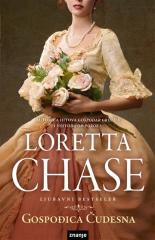
Gospođica čudesna

Gospođica čudesna

Loretta Chase

The first in the Carsington Brothers series, it is a Regency romance set in Derbyshire in the 1820s. Loretta Chase, a master of witty love stories, combines humor, suspense, and deep characters in a tale of the conflict between duty and heart.

Znanje, 2017.
Croatian. Latin alphabet. Paperback.
3.72 - 3.74
Priča o karmi

Priča o karmi

B. D. Benedict

A Story of Karma is one of the most famous and best-selling novels by Božidar D. Benedikt, a pioneer of the “religious thriller.” The book is still considered Benedikt's most influential work – a cross between Dan Brown and Carlos Castaneda.

Stari grad, 1997.
Croatian. Latin alphabet. Hardcover.
15.2210.65 - 15.3411.46