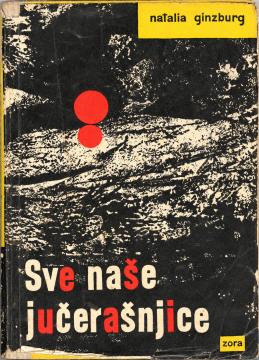
Sve naše jučerašnjice

Sve naše jučerašnjice

Natalia Ginzburg

Anna grows up in a small town in northern Italy. As fascism and war reshape the lives of two neighbouring families, an unexpected pregnancy and marriage to an older family friend take her south.

In All Our Yesterdays, Natalia Ginzburg follows two families who live across the street from each other in a small town in northern Italy. Anna is fourteen when the story begins. She listens to the older people around her and tries to make sense of their love affairs, quarrels and political arguments. While the adults argue about Mussolini, the young still find time to fall in love and think of ways to slip out of the house. As the danger grows, deciding whom to trust becomes a matter of safety.

When Anna becomes pregnant, she marries Cenzo Rena, an older family friend, and moves south with him. There she meets people whose decisions during the occupation will have consequences for their neighbours as well as themselves. War is felt in the questions that come up every day. Who still hasn’t come home? Who needs help? How safe is it to talk about any of this in front of others?

Ginzburg writes about fear, loss and standing by others under pressure with restraint and a sense of humour that survives even the worst news. Family sayings, awkward declarations of love and ordinary arguments give the characters voices of their own. Through them we hear how a generation’s life changes, from youth under fascism to the first days of peace.

Original title
Tutti i nostri ieri (1952.)
Translation
Zlata Marčić
Editor
Novak Simić
Graphics design
Boris Dogan
Dimensions
20 x 14 cm
Pages
235
Publisher
Zora, Zagreb, 1960.
 
Latin alphabet. Hardcover with dust jacket.
Language: Croatian.

One copy is available

Condition:Used, excellent condition
Damages or inconvenience notice:
  • Slight damage to the dust jacket
 

Are you interested in another book? You can search the offer using our search engine or browse books by category.

You may also be interested in these titles

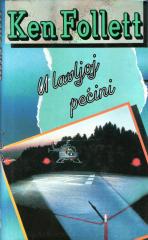
U lavljoj pećini

U lavljoj pećini

Ken Follett

A novel set in the turbulent period of the Cold War, with the action taking place in Afghanistan during the Soviet invasion. The story combines elements of espionage, love and political intrigue in one of the world's most unstable regions.

Otokar Keršovani, 1991.
Croatian. Latin alphabet. Hardcover with dust jacket.
4.58 €
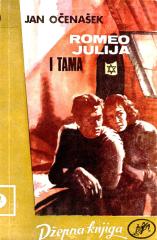
Romeo, Julija i tama

Romeo, Julija i tama

Jan Otčenášek

Im besetzten Prag des Jahres 1942 versteckt der Student Pavel die verwundete Jüdin Hana. Inmitten von Gefahr und Angst entsteht zwischen ihnen eine tiefe Liebe. Die Gestapo entdeckt sie, Pavel stirbt unter Folter während der Vernehmungen, und Hana überleb

Svjetlost, 1965.
Serbian. Latin alphabet. Paperback.
3.26 €
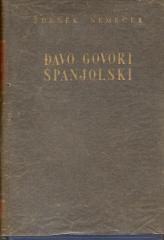
Đavo govori španjolski

Đavo govori španjolski

Zdeněk Němeček

Der Roman erzählt eine bewegende Geschichte über den Spanischen Bürgerkrieg. Anhand der Schicksale von Journalisten, Intellektuellen und einfachen Leuten schildert er die Brutalität, die ideologischen Konflikte und die dämonische Seite eines Krieges, in d

Savremena biblioteka, 1940.
Croatian. Latin alphabet. Hardcover with dust jacket.
3.26 - 11.36 €
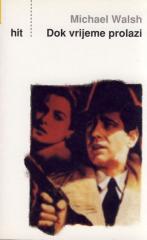
Dok vrijeme prolazi

Dok vrijeme prolazi

Michael Walsch

Michael Walshs As Time Goes By setzt die Geschichte des Films Casablanca fort und erweitert sie. Er verfolgt das Schicksal von Rick, Ilsa und anderen Figuren während des Zweiten Weltkriegs, geprägt von Liebe, Krieg und gefährlichen Missionen.

Znanje, 1999.
Croatian. Latin alphabet. Paperback.
4.36 €
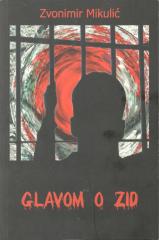
Glavom o zid

Glavom o zid

Zvonimir Mikulić-Đono

Zvonimir Mikulićs Roman ist den jungen Menschen gewidmet, die im Chaos des Heimatkriegs Gut von Böse unterschieden und dabei oft ihr Leben opferten. Das Werk möchte ihr großes Opfer und die kleine Welt, die ihnen wichtig war, vor dem Vergessen bewa

HKD Napredak, 2015.
Croatian. Latin alphabet. Paperback.
8.56 €
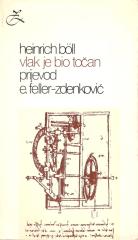
Vlak je bio točan

Vlak je bio točan

Heinrich Böll

Der erste Roman von Heinrich Böll. Dieses Werk (1949) legte den Grundstein für Bölls spätere Karriere, in der er sich weiterhin mit Themen wie moralischer Verantwortung und den Folgen des Krieges auseinandersetzte, wofür er 1972 den Nobelpreis für Literat

Grafički zavod Hrvatske (GZH), 1981.
Croatian. Latin alphabet. Paperback.
5.26 €