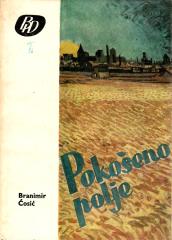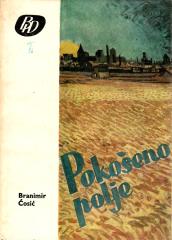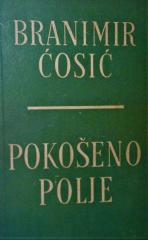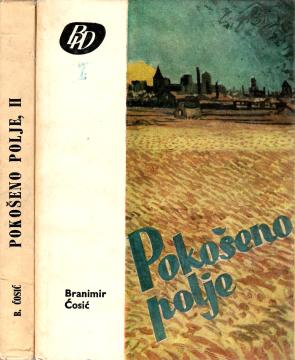
Pokošeno polje

Pokošeno polje

Branimir Ćosić

Mown Fields (1933) represents the culmination and swan song of a life that ended too soon – the author finished the novel just five months before his death from tuberculosis, at the age of thirty-one.

A book deeply imbued with personal pain and a broad picture of a broken time, where war trauma and post-war decadence intertwine into a difficult, inevitable whole. The first part of the novel bears a strong autobiographical imprint: through the eyes of a child and a young man, the horrors of World War I are brought to life – hunger, occupation, a devastated village, the loss of family and innocence. It is a world in which youth is mown down like a field under a mower, where national pride mixes with humiliation, and everyday life becomes a struggle for bare survival. Ćosić does not romanticize suffering; it is raw, tangible, leaving deep scars that never heal.

The second part shifts to Belgrade in the interwar years – a city of corruption, false ideals, moral collapse and existential emptiness. The main character, a journalist and intellectual, wanders through a gallery of failed characters: cynics, opportunists, petty bourgeois who have adapted to the new order. Ćosić’s criticism is harsh, but not pamphlet-like – it comes from within, from the disappointment of a generation that survived the war to witness the disintegration of all the values ​​it fought for. Love, friendship, faith in a better tomorrow – everything crumbles under the weight of time.

The style of the novel is urban, modern, psychologically profound, with a fragmentary flow that reflects inner unrest. There is no pathos, no embellishment; Ćosić writes with bare, almost documentary precision, but with warmth towards the disenfranchised and wounded. The title – a mowed field – is not just a metaphor for destroyed youth; it is an image of an entire era, where life is mowed before it blooms.

Dimenzije
17 x 12 cm
Ukupan broj strana
499
Nakladnik
Svjetlost, Sarajevo, 1961.
 
Latinica. Tvrde korice.
Jezik: Srpski.

Knjiga se sastoji od dva toma.

Jedan višetomni primjerak je u ponudi.

Dodano u košaricu!

Pokošeno polje
Prvi tom
Broj strana: 187
Stanje:Korišteno, u odličnom stanju
Pokošeno polje
Drugi tom
Broj strana: 312
Stanje:Korišteno, u odličnom stanju
 

Zanima Vas i neka druga knjiga? Možete pretražiti našu ponudu pomoću tražilice ili prelistati knjige po kategorijama.

Možda će Vas zanimati i ovi naslovi

Pokošeno polje

Pokošeno polje

Branimir Ćosić

„Pokošeno polje“ je najznačajniji i poslednji roman srpskog pisca Branimira Ćosića (1903–1934), završen 1933. godine, samo pet meseci pre njegove smrti od tuberkuloze u 31. godini života.

Nakladni zavod Hrvatske, 1949.
Srpski. Latinica. Tvrde korice.
5,50
Deobe

Deobe

Dobrica Ćosić

Deobe je roman o tragičnoj podeli Srba na četnike i partizane tokom Drugog svetskog rata. Dobitnik NIN-ove nagrade, deo je šire epske trilogije, inspirisane Ćosićevim iskustvima i istorijskim dokumentima.

Prosveta, 1963.
Hrvatski. Latinica. Tvrde korice s ovitkom.
13,74
Crna strijela

Crna strijela

Robert Louis Stevenson

U Engleskoj tokom Ratova ruža (15. vek), mladi Dik Šelton otkriva da je njegov staratelj, ser Danijel Brakli, ubio njegovog oca. Pridružio se bandi Crna strela, koja se bori protiv tiranije, spasava svoju verenicu Džoanu Sedli i traži pravdu.

August Cesarec, 1990.
Hrvatski. Latinica. Broširano.
3,24
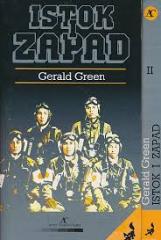
Istok i Zapad

Istok i Zapad

Gerald Green

U romanu „Istok i Zapad“ (1986), Grin isprepliće epsku priču o ljubavi i ratu, preplićući živote običnih ljudi sa velikim istorijskim događajima. Roman je snažna freska rata, ali i neuništivog duha koji traži svetlost usred tame.

August Cesarec, 1990.
Hrvatski. Latinica. Broširano.
Knjiga se sastoji od dva toma
7,42 - 7,46
Djevojčica iz grada

Djevojčica iz grada

Liubov Voronkova

Roman „Devojčica iz grada“ sovjetske spisateljice Ljubov Voronkove, objavljen 1942. godine, dirljiva je priča o detinjstvu, preživljavanju i nadi tokom Drugog svetskog rata. Delo je napisano jednostavnim, ali emotivnim stilom, pogodnim za mlađe čitaoce.

A.F.Ž. Hrvatske, 1947.
Hrvatski. Latinica. Broširano.
12,44
Vrijeme nasilja

Vrijeme nasilja

Jean-Pierre Simon

„Vreme nasilja“ (1966) je antiratni i aktivistički roman francuskog pisca Žan-Pjera Simona, manje poznatog autora iz sredine 20. veka, čije delo nosi tragove levičarske književnosti 1930-ih i 1940-ih.

Svjetlost, 1965.
Hrvatski. Latinica. Broširano.
2,46