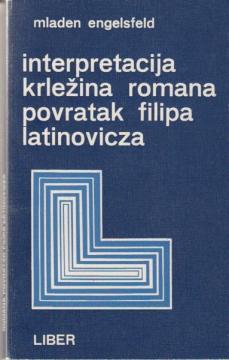
Interpretacija Krležina romana Povratak Filipa Latinovicza

Interpretacija Krležina romana Povratak Filipa Latinovicza

Mladen Engelsfeld

The author approaches the work through the prism of archetypal criticism and sees it as a work that explores deep existential themes through an introspective narrative and symbolic structure, making it one of the key novels of Croatian modernist literatur

Engelsfeld points out that Filip's process of individuation is shaped by his antithetical view of the world, where rational and emotional, conscious and unconscious, are opposed. Filip's introspective search for himself leads him through an analysis of his own traumas, memories, and relationship with his mother, which symbolizes a deeper existential crisis.

The novel also deals with the issue of identity and belonging, where Filip's return represents an attempt to reconcile with his own past and cultural heritage. Engelsfeld connects this motif with themes present in Krleža's short stories, such as "Devil's Island", which explore similar problems of identity and the meaning of life.

Engelsfeld's analysis also emphasizes the symbolic dimension of the novel, where characters and events are interpreted as archetypal patterns that reflect universal human dilemmas. Filip's artistic crisis and inability to create become a metaphor for the broader spiritual and cultural crisis of modern man.

Editor
Vera Čičin-Šain
Graphics design
Josip Vaništa
Dimensions
20 x 13 cm
Pages
144
Publisher
Sveučilišna naklada Liber (SNL), Zagreb, 1975.
 
Latin alphabet. Paperback.
Language: Croatian.

One copy is available

Condition:Used, very good condition
Damages or inconvenience notice:
  • Underlined in pencil
 

Are you interested in another book? You can search the offer using our search engine or browse books by category.

You may also be interested in these titles

Ruski realisti: kritički realizam

Ruski realisti: kritički realizam

Đerđ Lukač

The book influenced Yugoslav literary criticism in the 1950s, promoting Marxism in art.

Veselin Masleša, 1959.
Croatian. Latin alphabet. Hardcover.
7.98
Potrošeni govor

Potrošeni govor

Branimir Bošnjak
Izdavački centar Revija, 1980.
Croatian. Latin alphabet. Paperback.
4.36
Lingvistika i poetika

Lingvistika i poetika

Roman Jakobson

U svom predavanju Lingvistika i poetika, rusko-američki lingvista Roman Jakobson (1896–1982) istražuje odnos između jezika i književnosti, tvrdeći da je poetika deo lingvistike koji se bavi onim što verbalnu poruku čini umetničkim delom.

Nolit, 1966.
Serbian. Latin alphabet. Paperback.
9.58
Govorna interpretacija umjetničkoga teksta

Govorna interpretacija umjetničkoga teksta

Novak Novaković

Govorna interpretacija umetničkog teksta proizilazi iz želje pojedinca da tekst umetničkog lika verbalno oblikuje na umetnički način kao sopstveno iskustvo. U tome će vam pomoći ovaj priručnik interpretativnog čitanja i recitovanja.

Školska knjiga, 1980.
Croatian. Latin alphabet. Hardcover.
6.62 - 6.64
Slike iz svjetske književnosti III: Ruska književnost u osamnaestom stoljeću

Slike iz svjetske književnosti III: Ruska književnost u osamnaestom stoljeću

Vatroslav Jagić

Knjiga, u originalnom tvrdom povezu u stilu secesije i dodeljena od strane Fondacije Adolf Veber-Tkalčević za 1894. godinu, predstavlja pionirsko delo hrvatske književne teorije i uvod u temeljno proučavanje razvoja ruske književnosti u 18. veku.

Matica hrvatska, 1895.
Croatian. Latin alphabet. Hardcover.
14.72 - 94.99 (set)
Školski leksikon: Književnost

Školski leksikon: Književnost

Tvrtko Čubelić
Panorama, 1967.
Croatian. Latin alphabet. Hardcover.
3.12 - 3.75