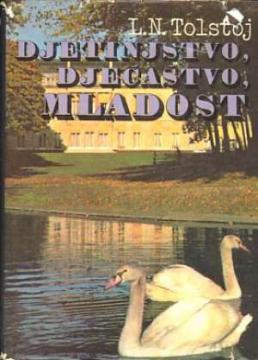
Djetinjstvo / Dječaštvo / Mladost

Djetinjstvo / Dječaštvo / Mladost

Lav Nikolajevič Tolstoj

Leo Nikolayevich Tolstoy, in his autobiographical trilogy Childhood (1852), Boyhood (1854), and Youth (1857), follows the growing up of Nikolai Irtenyev, a young nobleman whose experience mirrors Tolstoy's own youth.

In Childhood, ten-year-old Nikolai experiences the world through the eyes of a child, enchanted by the beauty of a country estate and the warmth of his family. The death of his mother brings his first great sorrow, awakening his awareness of transience. His relationships with his teacher Karl Ivanovich and friends reveal his first lessons about love, loss, and social differences. In Boyhood, Nikolai faces adolescence, a move to Moscow, and new challenges. He feels insecure, ponders religion and social norms, while struggling with internal conflicts and his first romantic longings. Youth follows Nikolai to university, where he faces disappointments in his education, social ambitions, and moral dilemmas. He tries to find his place in the world, balancing between idealism and the vanity of aristocratic life. Through introspection, Nikolai realizes the importance of authenticity, laying the foundation for his future spiritual quest.

The trilogy is Tolstoy's literary debut, and it immediately established him as a great writer. Inspired by his own life, the works introduce his realistic style and psychological depth, which would later culminate in War and Peace and Anna Karenina. The focus on internal conflicts, moral questions, and social criticism foreshadows the themes that would dominate his later works. Unlike later moralistic works such as Resurrection, the trilogy is intimate and devoid of didacticism, offering a universal coming-of-age story. These works demonstrate Tolstoy's ability to capture the subtleties of human emotion, laying the foundation for his status as a master of psychological realism.

The trilogy was received with enthusiasm in Russia, praising Tolstoy's freshness and sensitivity. Critics appreciated the realistic descriptions and emotional depth, although some later considered the works to pale in comparison to his epic novels. Today, the trilogy is considered a classic, treasured for its insight into Tolstoy's early development and the universality of the theme of coming-of-age.

Prevod
Malik Mulić
Urednik
Jakša Kušan
Naslovnica
Alfred Pal
Dimenzije
20 x 14 cm
Broj strana
348
Izdavač
Nakladni zavod Matice hrvatske, Zagreb, 1979.
 
Latinica. Tvrde korice s omotom.
Jezik: Hrvatski.

Jedan primerak je u ponudi

Stanje:Korišćeno, u odličnom stanju
Dodato u korpu!
 

Zanima Vas i neka druga knjiga? Možete pretražiti našu ponudu pomoću pretrage ili prelistati knjige po kategorijama.

Možda će Vas zanimati i ovi naslovi

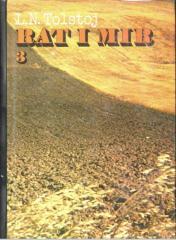
Rat i mir 3

Rat i mir 3

Lav Nikolajevič Tolstoj
Nakladni zavod Matice hrvatske, 1979.
Hrvatski. Latinica. Tvrde korice s omotom.
5,98
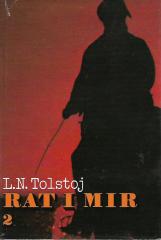
Rat i mir 2

Rat i mir 2

Lav Nikolajevič Tolstoj
Nakladni zavod Matice hrvatske, 1979.
Hrvatski. Latinica. Tvrde korice s omotom.
5,98
Krivotvoreni kupon i druge pripovijesti

Krivotvoreni kupon i druge pripovijesti

Lav Nikolajevič Tolstoj

Priče „Jutro jednog plemića“, „Iz beleški kneza Nehludova“, „Markerove beleške“, „Vaga“, „Dva husara“, „Kavkaski zarobljenik“, „Falsifikovani kupon“, „Smrtne beleške starca Fjodora Kuzmiča“ i „Zašto?“ istražuju teme morala, društva i duhovnosti.

Nakladni zavod Hrvatske, 1979.
Hrvatski. Latinica. Tvrde korice s omotom.
5,62
Crna kutija

Crna kutija

Amos Oz

The Black Box is a kaleidoscope of married life and love relationships. It is a novel that implicitly speaks about all of us.

Hena Com, 2001.
Hrvatski. Latinica. Tvrde korice.
10,98
Andrićeva lestvica užasa

Andrićeva lestvica užasa

Svetislav Basara

A Serbian writer known for his satirical novels, Andrić's Ladder of Horrors dissects the Balkan mentality through a parable of Yugo-nostalgia and national myths. The title alludes to Ivo Andrić as a litmus test for criticism – Balkans claim him or reject

24 sata, 2021.
Srpski. Latinica. Broširano.
11,56
Dok ležah na samrti

Dok ležah na samrti

William Faulkner

Faulkner's 1930 novel, a classic example of modernist literature. It is often compared to Joyce's "Ulysses" for its innovative structure, but is more accessible due to its focus on family.

Rad, 1985.
Hrvatski. Latinica. Broširano.
3,26