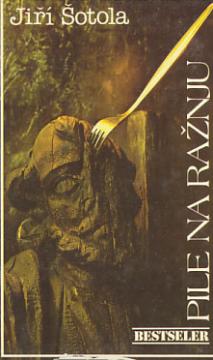
Pile na ražnju
Jiří Šotolas quasi-historischer Roman „Pile on a Spit“ (dt. „Der Haufen auf dem Spieß“) schildert die Absurdität des Lebens anhand der Geschichte des Antihelden – des Puppenspielers Matija Pile (Matěj Kuře), der während der Napoleonischen Kriege die Gesch
Im Wirrwarr der Napoleonischen Kriege desertiert der vierzigjährige Bauer Matija Pila 1800 in der Schlacht von Marengo, flieht nach Kärnten und schließt sich den Akrobaten an, um in der Freiheit des Springens zu schwelgen. Die Erinnerung an La Tournesses Liebe lässt ihn nicht los; unter falschem Namen Luigi Sevastiano sucht er Zuflucht auf Schloss Waldstein bei Litomyšl, scheitert jedoch an den Don-Juan-Übungen – seine Hose rutscht herunter – und flieht mit Pater Prospero zu den Piaristen. Dort spricht er mit Geistern, Gott und Puppen, die ihm von seiner gebrochenen Seele zuflüstern. Er stiehlt sie und irrt fortan als ewiger Sklave des Chaos umher.
Er kehrt nach Hause zurück: Sein Bruder Lukaš, ein gieriger Trunkenbold, der seine Stieftochter Barbara misshandelt, verdächtigt ihn des Erbes. Matija schließt sie in seine Obhut und bringt sie mit sich und den Puppen vor der Gewalt in Sicherheit. Sie reisen umher und verdienen ihren Lebensunterhalt mit Auftritten, doch Barbara stirbt bei der Geburt ihres Sohnes. Matija wird zum Vagabunden, die Puppen erwachen zum Leben und enthüllen die Tiefen seiner Seele; er besorgt sich einen gefälschten Pass (Ondřej Serenus), wird aber 1805 zum Militärdienst eingezogen. Die Franzosen töten die Puppen und vermischen so die Welten. Er stirbt im Stroh, umgeben von Geistern, mit der Sehnsucht nach Freiheit in kleinen Augenblicken.
Matija ist ein Antiheld, ein Opfer des Strudels, der den Menschen gegen die Großmächte (Napoleon als Sinnbild des Totalitarismus) zerbricht. Šotola feiert die Flucht in die innere Welt: Gespräche verspotten den Glauben und preisen die Stärke des Selbstvertrauens. Die Geschichte vermischt das Erhabene mit dem Groben, das Reale mit dem Imaginären in einer kreisförmigen Erzählung von 33 Kapiteln voller Ironie. Wie Kafka und Hrabal warnt Šotola vor den Täuschungen von Autorität und Macht.
Es werden zwei Exemplare angeboten
Kopiennummer 1
Kopiennummer 2
- Spuren von Patina