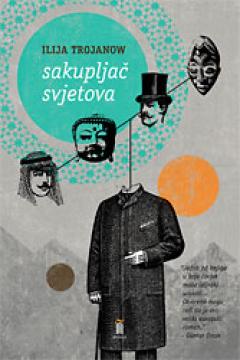
Sakupljač svjetova
Ein rares Buch

Sakupljač svjetova

Ilija Trojanow

A romanticized biography of British adventurer Sir Richard Francis Burton. Three great journeys (India, the Hajj to Mecca, Africa, and the search for the source of the Nile) told from the perspectives of his Indian, Arab, and African companions/guides.

The Collector of Worlds (2006) by Ilija Trojanow (Bulgarian-born, born 1965, nomadic writer) is an award-winning historical novel inspired by the life of Sir Richard Francis Burton (1821–1890), the legendary British explorer, polyglot, spy, translator of One Thousand and One Nights and erotic works.

The novel is not a classic biography, but a polyphonic account in three main parts: each focusing on one of Burton's key journeys, told from the perspective of his "native" companions and guides.

  • Part One: India in the 1840s – Burton in a British army uniform, but disguised as a Muslim, learns languages, customs, absorbs culture; the narrator is an Indian servant or friend who sees his ambivalence.
  • Part Two: The Hajj to Mecca in 1853 – Burton disguises himself as an Afghan pilgrim, risking his life to enter the forbidden city; the narrator is an Arab guide who witnesses his courage and obsession.
  • Part Three: Africa in the 1850s – an expedition with John Hanning Speke in search of the sources of the Nile; conflicts, disease, rivalry; the narrator is an African porter or companion who sees Burton as a stranger who "collects worlds" but never fully understands them.

Trojanow uses oriental storytelling traditions – stories within stories, fantasies, polyphony – to show the clash of East and West, colonial perspective and cultural appropriation. Burton is portrayed as an eccentric: a brilliant polyglot and adventurer who crosses borders, but also a colonizer who "collects" cultures like trophies. The novel is rich in detail, linguistically opulent, with deep insights into identity, disguise, and imperialism.

Titel des Originals
Der Weltensammler
Übersetzung
Sabine Marić
Editor
Petra Sapun
Titelseite
Marko Jovanovac
Maße
21 x 14 cm
Seitenzahl
461
Verlag
Novela media, Zagreb, 2010.
 
Latein Schrift. Taschenbuch.
Sprache: Kroatisch.

Angeboten wird ein Exemplar

Zustand:Gebraucht, in ausgezeichnetem Zustand
Zum Warenkorb hinzugefügt!
 

Interessieren Sie sich für ein anderes Buch? Sie können das Angebot über unsere Suchmaschine suchen und finden oder Bücher nach Kategorien durchsuchen.

Diese Titel könnten Sie auch interessieren

Na Rio de la Plati

Na Rio de la Plati

Karl May

Roman „Na Rio de la Plati“ je prvi deo dvodelne avanturističke priče Karla Maja, nastavljene u delu „U Kordiljerima“. Radnja se odvija u Južnoj Americi, u Urugvaju i Argentini, tokom revolucionarnih previranja 19. veka.

Stvarnost, 1964.
Kroatisch. Latein Schrift. Hardcover.
5,38 - 6,84
Prodane djevojke

Prodane djevojke

Hedwig Courths-Mahler

Klasičan sentimentalni ljubavni roman s motivima nasljedstva, intriga, klasnih razlika i sretne ljubavi koja pobjeđuje prepreke. Glavna junakinja je mlada Rose Rietberg, lijepa i plemenita djevojka koja rano ostaje siroče.

Nakladni zavod Matice hrvatske, 1987.
Kroatisch. Latein Schrift. Fester Einband mit Schutzumschlag.
6,985,24
I ne reče ni reči

I ne reče ni reči

Heinrich Böll

U Bollovim romanima jedna od središnjih tema je pokušaj da se očuvaju osnovne moralne vrijednosti u vrijeme terora, kao i u razdoblju materijalnog blagostanja i korupcije.

Svjetlost, 1965.
Serbisch. Latein Schrift. Taschenbuch.
3,22 - 3,98
Poezija i zbilja

Poezija i zbilja

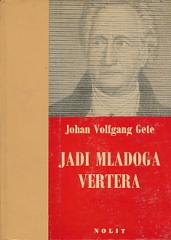
Johann Wolfgang Goethe

Goethe's greatest autobiographical prose, written between 1811 and 1833, covers his life from his birth in 1749 in Frankfurt to 1775, when he went to Weimar at the invitation of Duke Karl August.

Matica hrvatska, 1953.
Kroatisch. Latein Schrift. Fester Einband mit Schutzumschlag.
18,42
Noć

Noć

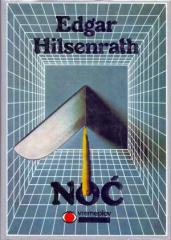
Edgar Hilsenrath

A poignant novel describing life in a Jewish ghetto in Ukraine, based on the author's experience as a Holocaust survivor. Set in the fictional town of Prokov, the novel follows the inhabitants of the ghetto, especially Raneko, as they struggle to survive.

August Cesarec, 1982.
Kroatisch. Latein Schrift. Fester Einband mit Schutzumschlag.
6,58
Doba života, doba smrti / Slavoluk pobjede / Ljubi bližnjega svoga

Doba života, doba smrti / Slavoluk pobjede / Ljubi bližnjega svoga

Erich Maria Remarque

Selected works of Remarque in three volumes.

SKD Prosvjeta, 1963.
Kroatisch. Latein Schrift. Hardcover.
Das Buch besteht aus drei Bänden
9,56