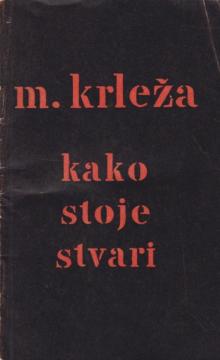
Kako stoje stvari: Predavanje održano u Domu JNA u Zagrebu 17. 12. 1952.

In seinem Vortrag „Wie die Dinge sind“ (1952) erörtert Krleža die politische und kulturelle Situation des Nachkriegsjugoslawiens und betont die Notwendigkeit kritischen Denkens, kultureller Erneuerung und des Widerstands gegen Dogmatismus.
„Wie die Dinge stehen“ ist das Transkript von Krležas Vortrag vom 17. Dezember 1952 im Haus der Jugoslawischen Volksarmee – eine Rede in einer Zeit intensiver politischer und kultureller Umbrüche nach dem Bruch mit dem Informbiro. Krleža wendet sich als Schriftsteller, Intellektueller und Zeitzeuge an sein Publikum und erklärt, was kulturelle und politische Arbeit in einem Land bedeutet, das sich gerade erst von den Trümmern des Krieges und ideologischen Zerwürfnissen erholt.
Krleža analysiert den Zustand der Gesellschaft ohne Pathos: Er spricht von der Notwendigkeit, mit Dogmen, leeren Phrasen und bürokratischen Automatismen zu brechen, die den kreativen Geist ersticken. Er betont die Bedeutung von Bildung, kritischem Bewusstsein und kultureller Offenheit und stellt sie der Mentalität des „ideologischen Abstellgleises“ und der Routine gegenüber, die die Revolution zu einem bloßen Verwaltungsmechanismus degradiert. Seine Rhetorik ist kraftvoll, aber nicht propagandistisch. Er beharrt auf der Verantwortung der Intellektuellen und der Notwendigkeit, dass die Gesellschaft eine Kultur des Dialogs entwickelt, nicht blinden Gehorsams.
Der Text ist, wie die meisten öffentlichen Reden Krležas, reich an historischen Bezügen, Ironie und umfassenden kulturellen Beobachtungen. Die Rede verschweigt nicht die Spannungen der Zeit: Krleža spricht über die Gefahren der Introversion, die Folgen des Fanatismus und die Bedeutung „neuer Illusionen“, die entstehen können, wenn Denken zum Dogma wird. Gleichzeitig birgt der Text auch ein starkes optimistisches Element – den Glauben, dass es möglich ist, eine Gesellschaft aufzubauen, die auf Wissen, Kreativität und Gedankenfreiheit beruht.
So bleibt er ein wichtiges Zeitdokument und eine einzigartige Verbindung von politischer Rede und Essay: Krležas Blick auf den Zustand der Gesellschaft aus der Perspektive eines Schriftstellers, der sich nicht mit einfachen Wahrheiten abfindet und der davon überzeugt ist, dass Kultur die Grundlage jeder wahren Erneuerung ist.
Angeboten wird ein Exemplar