Đavoli dolaze

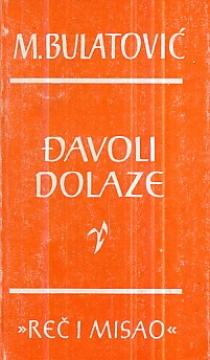
Đavoli dolaze

Miodrag Bulatović

In Miodrag Bulatović's novel The Devils Are Coming, grotesque and phantasmagoria meet the reality of a Balkan village. Through symbolism, irony and dark humor, the author depicts moral decay, madness and evil that arises among people, not outside of them.

Devils Are Coming is one of the most memorable novels by Miodrag Bulatović, published in the early 1950s, which established the author as an exceptionally original voice of modern Serbian and Montenegrin literature. The novel is an allegorical, grotesque and psychologically complex work in which reality and phantasmagoria constantly intertwine, creating the atmosphere of a hallucinatory, almost apocalyptic world.

The plot is set in a Balkan village devastated by war and poverty, where, on the eve of great historical and spiritual upheavals, “devils” appear – not as supernatural beings, but as symbols of human depravity, fear and madness. Through a series of characters who lose touch with reason, Bulatović shows how moral boundaries are erased in times of evil, and how everyone carries their own share of darkness within themselves.

The style of the novel is marked by poetic tension, expressionistic images, bold metaphors and black humor. Bulatović's language pulsates between visionary lyricism and brutal realism, creating a unique artistic blend that unsettles and enchants the reader.

Thematically, the novel examines the boundary between good and evil, madness and reason, creating a panorama of a world in which "devils" are no longer demons from legends, but people who have lost faith, meaning and humanity. The Devils Are Coming remains one of the key works of modernist prose and a symbol of Bulatović's obsessive theme - the tragic, but also grotesque nature of man.

Editor
Branislav Milošević
Titelseite
Janko Krajšek
Maße
18 x 10,5 cm
Seitenzahl
249
Verlag
Rad, Beograd, 1986.
 
Auflage: 10.000 Exemplare
 
Latein Schrift. Taschenbuch.
Sprache: Serbisch.
ISBN
8-60-900021-4

Angeboten wird ein Exemplar

Zustand:Gebraucht, in ausgezeichnetem Zustand
Zum Warenkorb hinzugefügt!
 

Interessieren Sie sich für ein anderes Buch? Sie können das Angebot über unsere Suchmaschine suchen und finden oder Bücher nach Kategorien durchsuchen.

Diese Titel könnten Sie auch interessieren

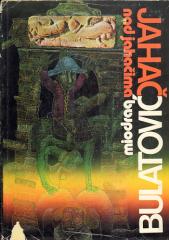
Jahač nad jahačima

Jahač nad jahačima

Miodrag Bulatović

Roman o apsurdu, moći i propasti čovjeka opsjednutog veličinom. U simboličnom, grotesknom svijetu autor razotkriva surovost vlasti i ludilo u kojem ambicija i strah brišu granicu između čovjeka i zvijeri.

Partizanska knjiga, 1980.
Serbisch. Latein Schrift. Fester Einband mit Schutzumschlag.
9,99
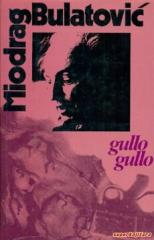
Gullo Gullo

Gullo Gullo

Miodrag Bulatović

Gullo Gullo roman je groteskne snage o moralnom i duhovnom rasulu ljudskog bića. U svijetu nasilja, straha i apsurda glavni lik luta između života i smrti, dobra i zla, u potrazi za smislom u tragično izopačenoj stvarnosti.

Prosveta, 1983.
Serbisch. Latein Schrift. Fester Einband mit Schutzumschlag.
2,82
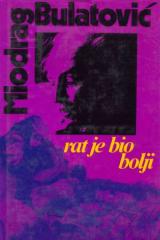
Rat je bio bolji

Rat je bio bolji

Miodrag Bulatović

Zamišljen i realizovan kao zasebna celina, ovaj roman se može tumačiti i kao drugi deo knjige „Junak na magarcu“. U većoj meri nego u „Junaku“, ovde je rat „koji je bio bolji“ prikazan kao gigantska burleska i bazen demonskih strasti.

Prosveta, 1983.
Serbisch. Latein Schrift. Fester Einband mit Schutzumschlag.
2,99
Proces

Proces

Franz Kafka

Kafka je napisao „Proces“ između 1914. i 1915. godine, objavljen posthumno 1925. godine. Roman je nedovršen, ali sa dodatnim završnim poglavljem koje je napisao Maks Brod. Izdanje sa predgovorom B. Živojinovića i pogovorom Valtera Kilija.

BIGZ, 1990.
Serbisch. Latein Schrift. Taschenbuch.
4,26
Stotina godina (antikronika)

Stotina godina (antikronika)

Dario Harjaček

Roman „Sto godina“ Darija Harjačeka pruža panoramski pogled na Trešnjevku i njene stanovnike kroz vek promena, ideologija i ljudskih sudbina – mozaik Zagreba u kome se prepliću život, umetnost i istorija.

Oceanmore, 2025.
Kroatisch. Latein Schrift. Taschenbuch.
13,42
Zagrepčanka

Zagrepčanka

Branislav Glumac

Branislav Glumac 1974. objavljuje roman bez točaka i zareza, kao neumoljivi tok misli mlade buntovnice. Objavljen u socijalističkoj Jugoslaviji, djelo je izazvalo skandal svojom otvorenošću i postalo klasik o generacijskom buntu.

IROS, 1986.
Kroatisch. Latein Schrift. Hardcover.
8,24